
The Paradox of Radical Transparency
The current push for maximum government transparency operates on a simple premise: sunlight is the best disinfectant, and democratic accountability requires citizens to see exactly how their representatives conduct the public’s business. This logic has driven everything from Freedom of Information Act expansions to live-streaming city council meetings to demands that legislators publish their daily schedules in real-time. Yet this seemingly bulletproof position contains a fundamental tension that transparency advocates rarely acknowledge.
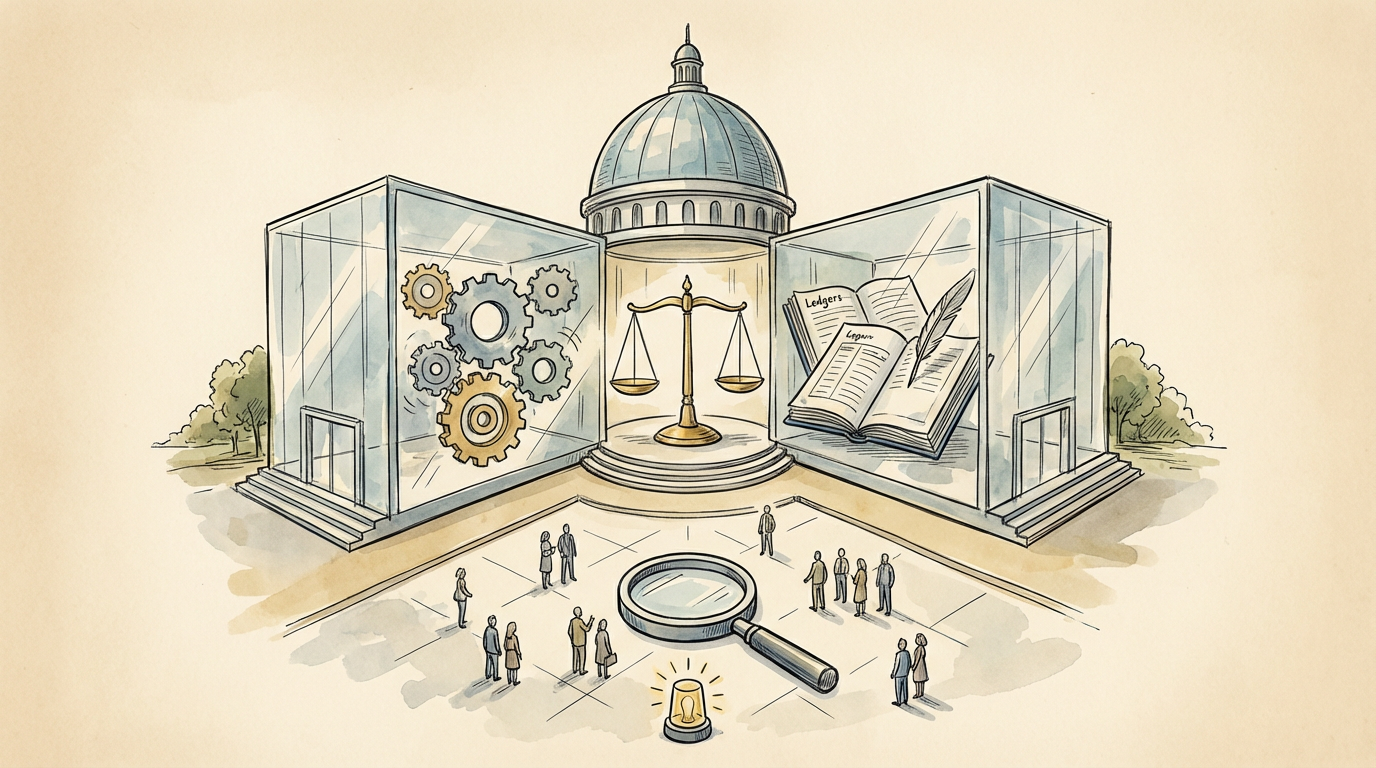
Consider the deliberative process that produces effective governance. Political scientists have long understood that successful negotiation, compromise, and policy development often require what we might call “protected spaces” where officials can explore ideas, test proposals, and acknowledge uncertainties without every preliminary thought becoming tomorrow’s attack ad. The Supreme Court recognized this principle in Nixon v. Administrator of General Services, noting that some degree of confidentiality in executive deliberations helps the public interest by ensuring candid advice and open internal debate.
This creates what I call the transparency paradox: the very openness we demand to ensure accountable government may actually undermine the conditions necessary for thoughtful governance. When every internal memo becomes a public document and every private conversation risks exposure, officials naturally drift toward safer, more politically defensible positions rather than exploring innovative or potentially controversial solutions to complex problems.
The Institutional Costs of Performative Governance
The shift toward radical transparency has produced an unintended consequence that deserves serious attention: the transformation of governance from deliberation to performance. When legislators know that every committee discussion will be broadcast and every email might be subject to public release, the incentive structure fundamentally changes. Rather than engaging in the messy, iterative process of policy development, officials increasingly operate as if they are constantly on stage before a critical audience.
This performative dynamic shows up in several troubling ways. First, it encourages position-taking over problem-solving. Legislators who might privately acknowledge the complexity of an issue feel compelled to stake out clear, unambiguous public positions early in the process. Second, it shrinks the space for intellectual honesty about trade-offs and uncertainties. Third, it can actually reduce meaningful public input by pushing the real decision-making into informal channels that are harder to monitor and influence.
The European Union’s experience with transparency initiatives offers instructive lessons here. After implementing extensive public access rules for Council meetings and documents, researchers found that much sensitive negotiation simply moved to informal settings like breakfast meetings and corridor conversations. The result was not greater accountability but rather less visible and potentially less inclusive decision-making processes.
The Information Quality Problem
Beyond these institutional concerns lies a more fundamental challenge: the relationship between information quantity and democratic accountability. Transparency advocates often assume that more information automatically leads to better-informed citizens and more accountable government. Yet research in political psychology suggests this relationship is far more complex than such assumptions suggest.
Citizens face severe limitations in their ability to process and meaningfully engage with the vast amounts of information that radical transparency produces. The cognitive burden of sorting through thousands of pages of meeting minutes, email exchanges, and policy documents often overwhelms even the most civically engaged individuals. This creates what scholars call “information inequality,” where only those with significant time, resources, and expertise can effectively use transparency tools.
Moreover, raw information without context or interpretation can actually mislead rather than inform. A budget document showing increased spending on a particular program tells us little without understanding the program’s objectives, previous funding levels, performance metrics, and comparative costs. Similarly, private communications between officials may appear concerning when taken out of context but represent entirely appropriate coordination when understood within the broader policy development process.
This suggests that our transparency efforts should focus less on maximizing information release and more on ensuring that the information we do release is accessible, contextual, and genuinely useful for democratic accountability.
Toward Accountable Rather Than Transparent Government
The distinction between transparency and accountability represents more than semantic precision, it points toward a different approach to democratic governance. Accountability requires that officials can explain and justify their decisions to the public, but it doesn’t necessarily require that every step in the decision-making process be visible in real-time. Indeed, premature transparency can sometimes undermine accountability by pressuring officials to defend preliminary positions before they have been fully developed or tested.
Effective accountability mechanisms might include regular public forums where officials explain major decisions and respond to citizen questions, independent oversight bodies with the authority to investigate government operations, and clear performance metrics that allow citizens to evaluate government effectiveness. These approaches recognize that democratic accountability is ultimately about ensuring responsiveness to public needs and values, not about satisfying public curiosity about internal government operations.
The congressional committee system offers a useful model here. While committee deliberations are generally public, members also have opportunities for informal consultation and negotiation that help compromise and deal-making. The key is that the final decisions and their rationales are subject to public scrutiny and debate, even if every preliminary discussion is not broadcast live.
Reframing the Transparency Debate
None of this should be read as an argument against government openness or accountability. Rather, it suggests that we need a more sophisticated understanding of how transparency tools can support rather than undermine effective democratic governance. This might involve distinguishing between different types of government information and applying different transparency standards accordingly.
For instance, final policy decisions, voting records, and the use of public resources clearly warrant maximum transparency. Internal deliberations, preliminary proposals, and strategic communications might require more limited disclosure, perhaps with delayed release that allows for candid discussion while ensuring eventual accountability. The goal should be creating institutional arrangements that encourage thoughtful deliberation while maintaining meaningful public oversight.
This reframing also requires acknowledging that transparency is not a neutral good but a tool that can be deployed effectively or ineffectively depending on the specific context and implementation. Like any institutional reform, transparency initiatives involve trade-offs and unintended consequences that deserve serious consideration rather than reflexive dismissal.
As we continue to refine our democratic institutions for the twenty-first century, these distinctions will only become more important. I would welcome thoughts from readers who have observed these dynamics in their own communities or have ideas about how we might better balance the competing demands of openness and effective governance.