The Scale of Invisibility
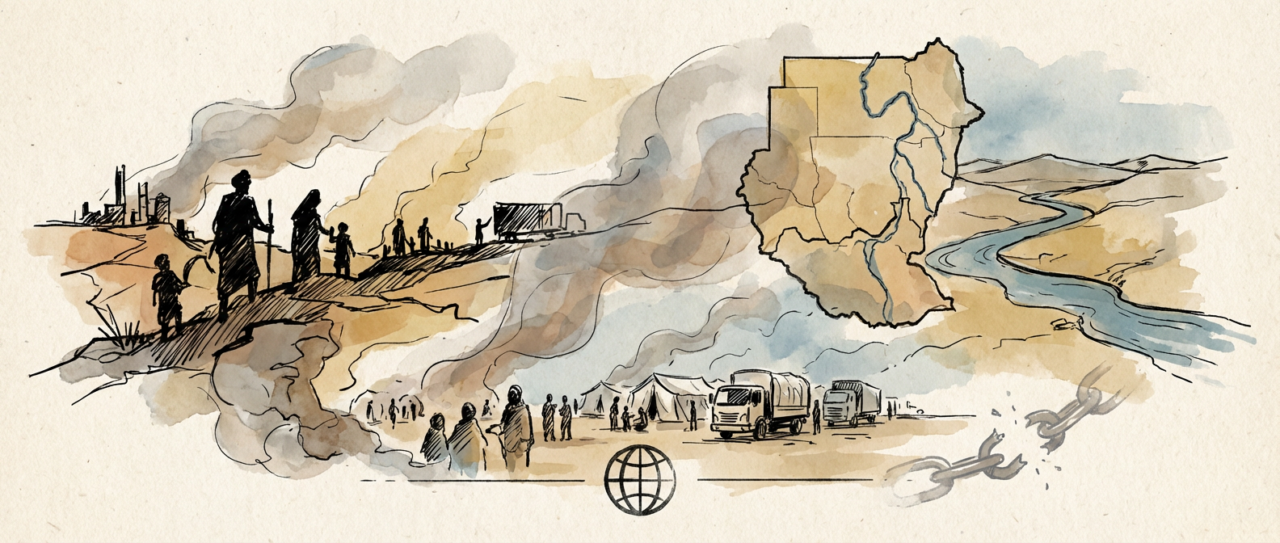
When we talk about humanitarian catastrophe, our attention tends to follow geopolitical salience. We know the numbers from Ukraine, from Gaza, from Myanmar. Yet Sudan, now in its third year of active conflict between the Sudanese Armed Forces and the Rapid Support Forces, has quietly become something far more devastating: the world’s largest internal displacement crisis. Over 11 million Sudanese have been forced from their homes, a figure that now exceeds displacement from the Ukraine invasion. This is not a marginal distinction. It represents a fundamental reshaping of human geography on a continent, the wholesale uprooting of entire population segments, and yet it barely registers in Western news cycles or policy deliberations.
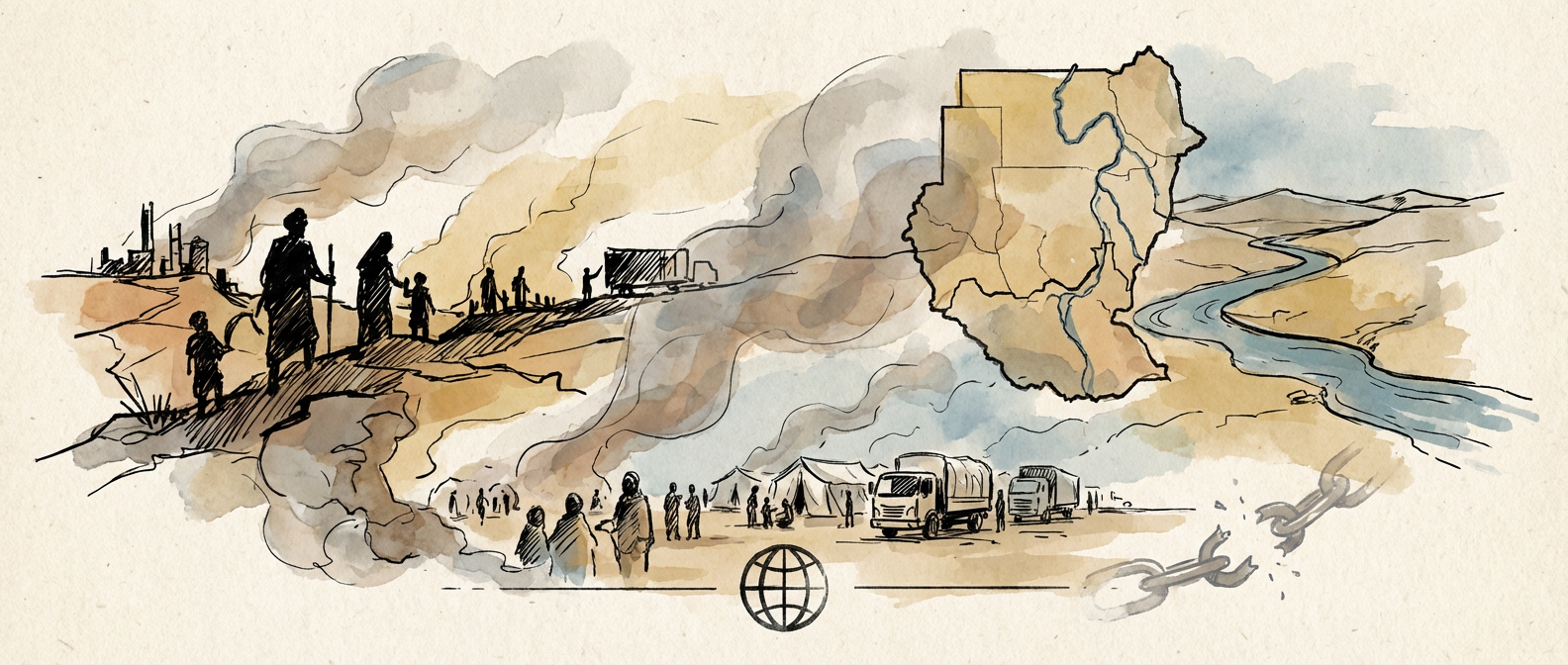
The hunger numbers make this invisibility even harder to process. Approximately 8.1 million Sudanese face emergency or catastrophic famine conditions according to recent UN World Food Programme assessments. That’s roughly one in five Sudanese people living under threat of starvation right now. These are not projections or worst-case scenarios. They are current classifications using established metrics that distinguish between mere food insecurity and the point at which mortality rates spike sharply. The World Food Programme Sudan Emergency Situation Report updates these figures regularly, each revision typically moving in one direction: worse.
Why does a crisis of this magnitude remain so thoroughly peripheral to international consciousness? The answer requires examining not just the facts on the ground but the structural conditions that determine which human suffering receives attention and which stays effectively invisible. Sudan’s invisibility is not accidental. It is the product of specific choices, competing narratives, and the particular geopolitical architecture of this moment.
The Geopolitical Stalemate and Great Power Paralysis
The conflict between the SAF and the RSF presents a genuinely complicated picture for external powers because it does not align neatly with existing great power competition frameworks. The United States and Western allies support neither side enthusiastically. Russia, meanwhile, has found in Sudan’s chaos a useful mechanism for obstruction. Between January 2025 and January 2026, Russia used its Security Council veto three separate times to block humanitarian and monitoring resolutions focused on Sudan. On two of those occasions, Russia acted alongside China, suggesting coordination rather than isolated protest. This is the grammar of contemporary geopolitical deadlock: not active intervention but strategic paralysis, where one power’s capacity to say no outweighs the international community’s capacity to say yes.
This veto strategy serves multiple Russian interests at once. It demonstrates Moscow’s continued relevance within the Security Council despite isolation over Ukraine. It complicates Western efforts to establish precedent for humanitarian intervention. It signals support for state sovereignty against what Moscow portrays as Western interventionism, a narrative that resonates with several African governments despite its profound hypocrisy given Russia’s own conduct. The result is that the UN Security Council, theoretically the body designed to address precisely this category of crisis, has become instead a forum for demonstrating that no consensus exists and therefore nothing formal will be done.
The historical parallel is instructive, if imperfect. During the Darfur crisis of the early 2000s, the international community fractured over responsibility to protect principles, Chinese economic interests in Sudan, and disagreements about what constituted genocide versus war crimes. Yet even then, some limited multilateral response mechanisms functioned. Today the paralysis runs deeper. We are not arguing about what to call the violence or whether intervention is justified. We are not even reaching those conversations because the Security Council cannot pass basic resolutions establishing fact-finding mechanisms.
The RSF, External Patrons, and the Weapons Pipeline
Understanding why the conflict persists requires understanding its material substrate. The Rapid Support Forces, which began as a militia operating on Sudan’s peripheries, have become a sophisticated military organization with documented external backing. According to a December 2025 UN Panel of Experts report submitted to the Security Council, the RSF has received weapons and logistical support from the United Arab Emirates. This is not speculation or inference from circumstantial evidence. This is documented provision of military materiel by a regional power with its own strategic interests in Sudan’s instability.
The UAE’s involvement adds a layer of complexity that distinguishes Sudan’s conflict from simpler narratives of internal civil war. The Emirates pursued specific strategic objectives in Sudan related to Red Sea access, regional positioning against Iran-aligned forces, and economic opportunities within a fractured state. By sustaining the RSF as a counterbalance to the SAF, the UAE ensures that neither side achieves decisive victory, which paradoxically perpetuates the very conditions generating humanitarian catastrophe. This pattern shows up repeatedly in contemporary conflicts: external powers invested in managed instability rather than resolution, each preventing the other from winning while the civilian population absorbs the cost of indefinite stalemate.
The UN OCHA Sudan Humanitarian Response Plan 2026 documents how this weaponization of territory affects basic humanitarian access. Relief organizations cannot operate effectively in areas contested by armed factions with external backing and therefore no incentive to compromise on access or terms. The weapons pipeline that sustains the RSF is the same pipeline that strangles humanitarian response.
Justice Mechanisms and the Specter of Accountability
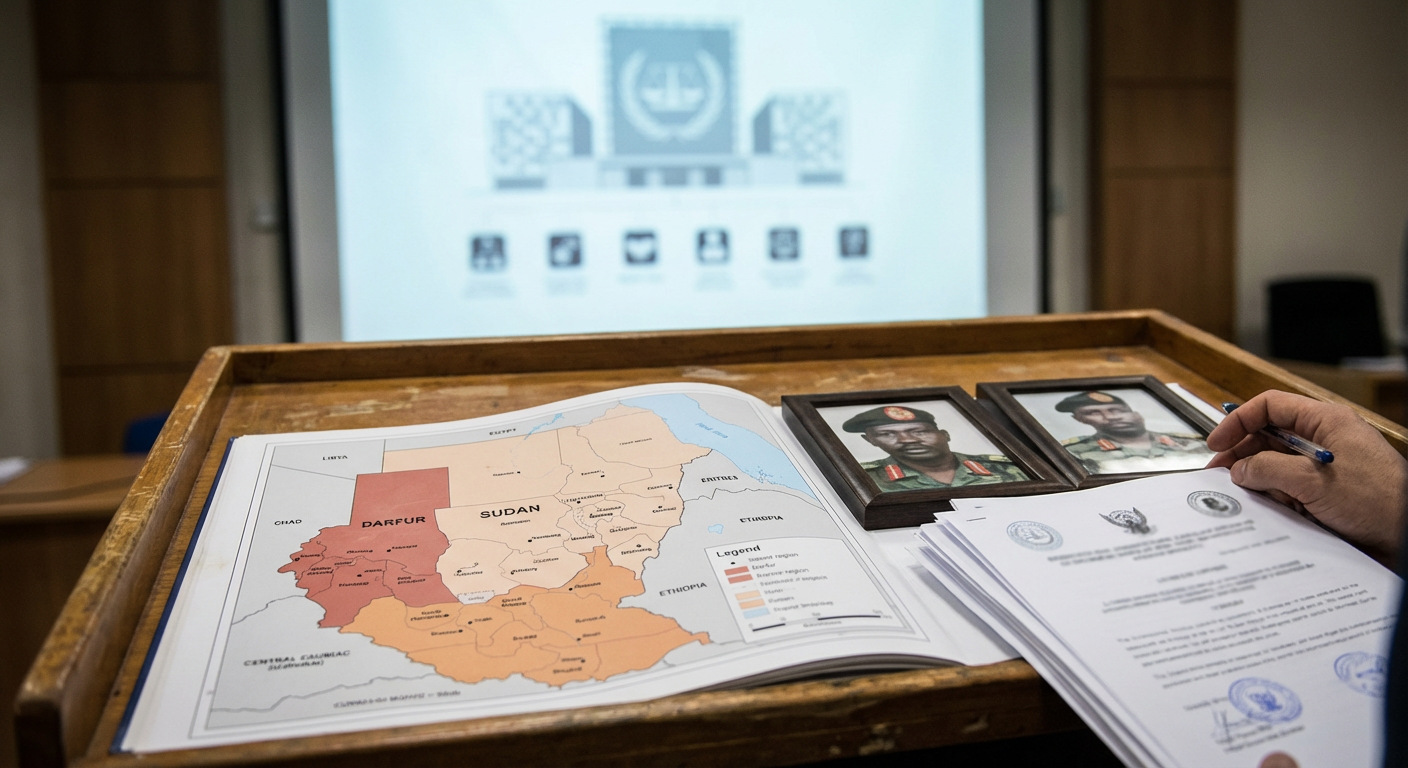
The International Criminal Court issued two new arrest warrants for RSF commanders in November 2025, bringing the total number of active Sudan-related warrants to seven individuals. These warrants target mass atrocity crimes within Darfur, crimes severe enough to theoretically transcend questions of internal sovereignty and invoke universal jurisdiction frameworks. Yet warrants do not produce arrests when the alleged perpetrators command military forces in active control of territory and when external powers have no interest in their apprehension.
This is one of the fundamental contradictions of contemporary international law. We have built an elaborate architecture of accountability mechanisms, courts, and legal frameworks that work well when addressing the crimes of defeated adversaries or peripheral actors. They work far less effectively when confronting the crimes of actors with staying power, regional backing, and no immediate prospect of defeat. The RSF commanders face arrest warrants they will never answer to while they continue directing military operations affecting millions of civilians.
There is a certain irony here worth sitting with. When we examine post-conflict justice processes, we tell a narrative of progress: Nuremberg established precedent, the ad hoc tribunals for Yugoslavia and Rwanda refined the mechanisms, the ICC represents the mature expression of an evolving commitment to accountability. Sudan exposes the limits of that narrative. The legal infrastructure exists. What has collapsed is the political will and geopolitical conditions necessary to actually deploy it against actors who remain militarily potent.
The Forgotten War and What It Reveals
Sudan’s conflict enters its third year not because the underlying factors that produced it remain unresolved, but because resolution serves no one with power to enforce it. The SAF holds the capital and fragments of territory. The RSF controls other fragments and refuses defeat. Russia ensures that multilateral pressure cannot coalesce. The UAE sustains the RSF. And the international community watches, documents, expresses concern, and ultimately does very little.
Sudan’s invisibility is not simply a failure of media attention or public awareness, though it is that too. It is a structural product of a world where humanitarian catastrophe can occur at massive scale while remaining peripheral to the concerns of those with capacity to intervene. Over 11 million displaced people. Eight million facing famine. Arrest warrants unexecuted. Security Council resolutions that cannot pass. This is not tragedy in the classical sense, involving forces beyond human control. It is tragedy in the modern sense, involving human choices about which crises merit attention and resources.
What aspects of Sudan’s conflict do you find most concerning or underreported? I would welcome thoughts on how geopolitical paralysis affects humanitarian response, or whether you see any pathways toward resolution that current frameworks might enable.