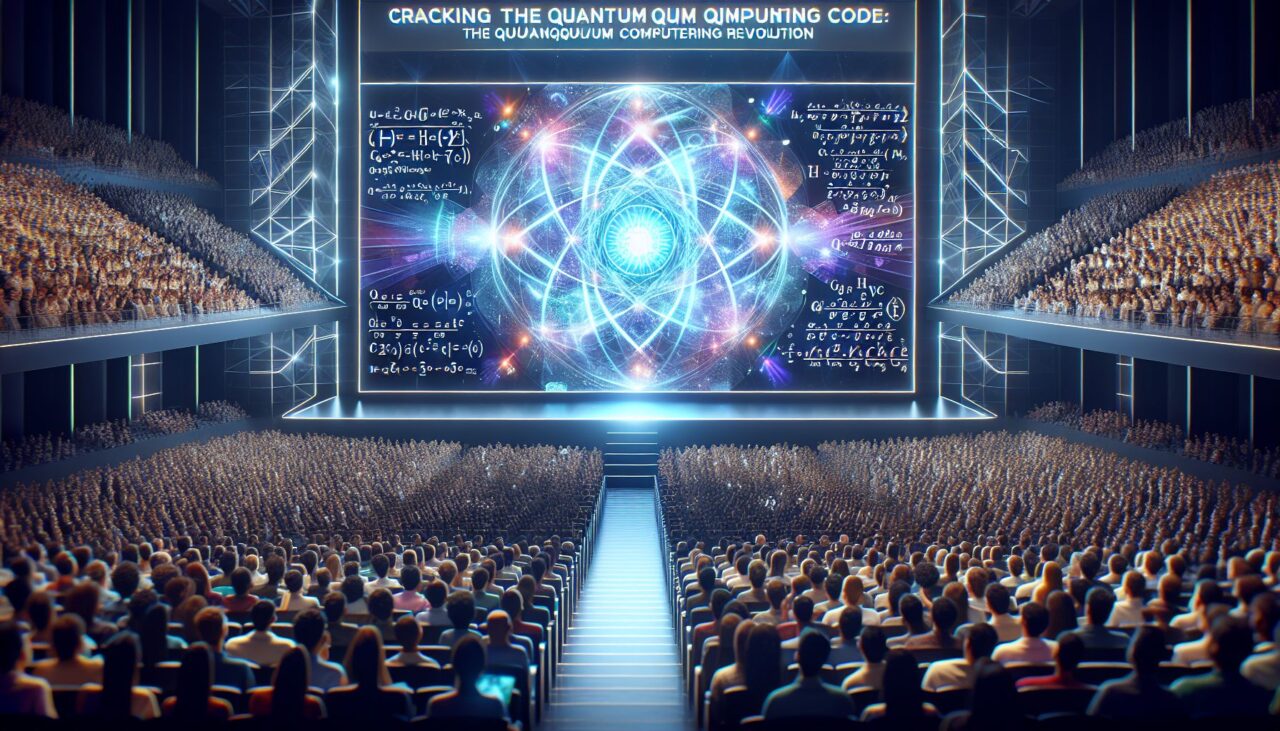
Hey tech folks! Grab your popcorn, because today’s topic is wild. Imagine a world where computers can solve problems in seconds, problems that would take the age of the universe on your souped-up gaming PC. This is the world of quantum computing. A lot’s happening in this corner of the tech world, and trust me, it ain’t black magic. It’s quantum mechanics. But just as enchanting!
What the Heck is Quantum Computing?
Alright, let’s jump right in. If a traditional computer is like an incredibly fast abacus, a quantum computer is like a maestro conducting an infinite symphony. It can process all possible solutions to a problem simultaneously. Yep, you read that right. Quantum bits, or qubits, are the little divas in this scenario. They manage to straddle a bizarre line between 0 and 1, thanks to quantum superposition, while also being curiously interconnected through entanglement. It’s the kind of sci-fi-meets-reality stuff that’d make Isaac Asimov proud.
The Science Behind the Magic
If your eyes glaze over every time someone mentions quantum mechanics, you’re not alone. Quantum computing uses principles that even seasoned physicists find profoundly mind-boggling. Here’s the quick-and-dirty lowdown:
-
Superposition: Our hero, the qubit, can be in a state of 0, 1, or both at the same time. Imagine listening to music while naps are happening and drinks are being served. Perplexing? Yes. Awesome? Absolutely.
-
Entanglement: This is where quantum computing graduates from neat party trick to full-on magic show. When qubits become entangled, their states become linked. A change in one instantly affects its partner, even if separated by galaxies (Einstein called it “spooky action at a distance”).
-
Interference: Think of this as noise-cancelling headphones for solving computational problems. Quantum computers use interference to combine overlapping waves in a way that amplifies the right answers and cancels out the wrong ones.
Mind-Blowing Applications
So, what can quantum computing do for us ordinary folk who aren’t physicists or tech billionaires? Short answer: loads of stuff. For instance, optimizing complex systems like supply chains, cracking cryptographic codes like they’re fragile piñatas. And we’ve barely scratched the surface here!
-
Healthcare & Pharmaceuticals: Quantum computers could change how we understand protein folding, a complex problem with huge implications for designing better drugs faster than ever.
-
Climate Modeling: These beasts could model the Earth’s climate with unprecedented precision, helping us navigate our way out of the climate crisis or at least bring winter gear when it’s needed.
-
Finance: Think ridiculously fast trading and new ways to assess risks. We could even model entire economies. Catch that stonks meme blitzing through quantum speed!
The Nerdy Trials and Tribulations
While this all sounds fabulously utopian, quantum computing has its quirks and limitations. We’ve got a few hurdles here before Hollywood makes a sequel:
-
Decoherence: When these qubit divas fall out of tune because of external disturbances, they collapse into a single state, ruining the performance. It’s like someone pulling the plug mid-solo.
-
Error Rates: Keeping quantum states stable is a bit like balancing an ice cream cone on your nose while tap dancing. Researchers are racing to create error-correcting codes that would make anything short of perfection, well, passable.
-
Scalability: Currently, scaling up to commercially viable quantum computers involves cosmic challenges. Companies are developing new techniques like topological qubits and hybrid systems, but it’s still a work-in-progress.
The Future: Quantum Knights in Shining Armor?
The speculative section we warned you about! The successful mass adoption of quantum computers could redefine industries. And it won’t just benefit deep-pocketed corporations. Imagine instantaneously finding exact matches in huge data sets. Say goodbye to buffering streams just when the plot twist unfolds.
Quantum is set to revolutionize AI too. Picture artificial intelligence as smart as your witty uncle at the Thanksgiving dinner table, but without the incessant need for validation. These supercharged algorithms could solve problems and simulate scenarios that would take classical counterparts eons.
Closing the Curtain
So, where are we on the timeline? Think 1920s aviation: the designs are still wild and wacky, the potential is astronomical, the crashes relatively frequent, but we’re definitely getting somewhere.
Whether you’re an utter quantum novice or could talk qubits in your sleep, it’s worth keeping an eye on the developments. As quantum computing progresses from fledgling experimental systems to full-fledged supercomputers, make sure you’ve got your popcorn ready. I’ve reserved the best spot for you at the frontier of tomorrow’s tech carnival.
Fellow tech folks, it’s all still a bit murky, a mix of speculation and promise. But if there’s one thing evident, it’s where innovation thrives: on the edge of chaos, in the chaos of qubits, lies a future that gleams brighter than Schrödinger’s cat ever did.