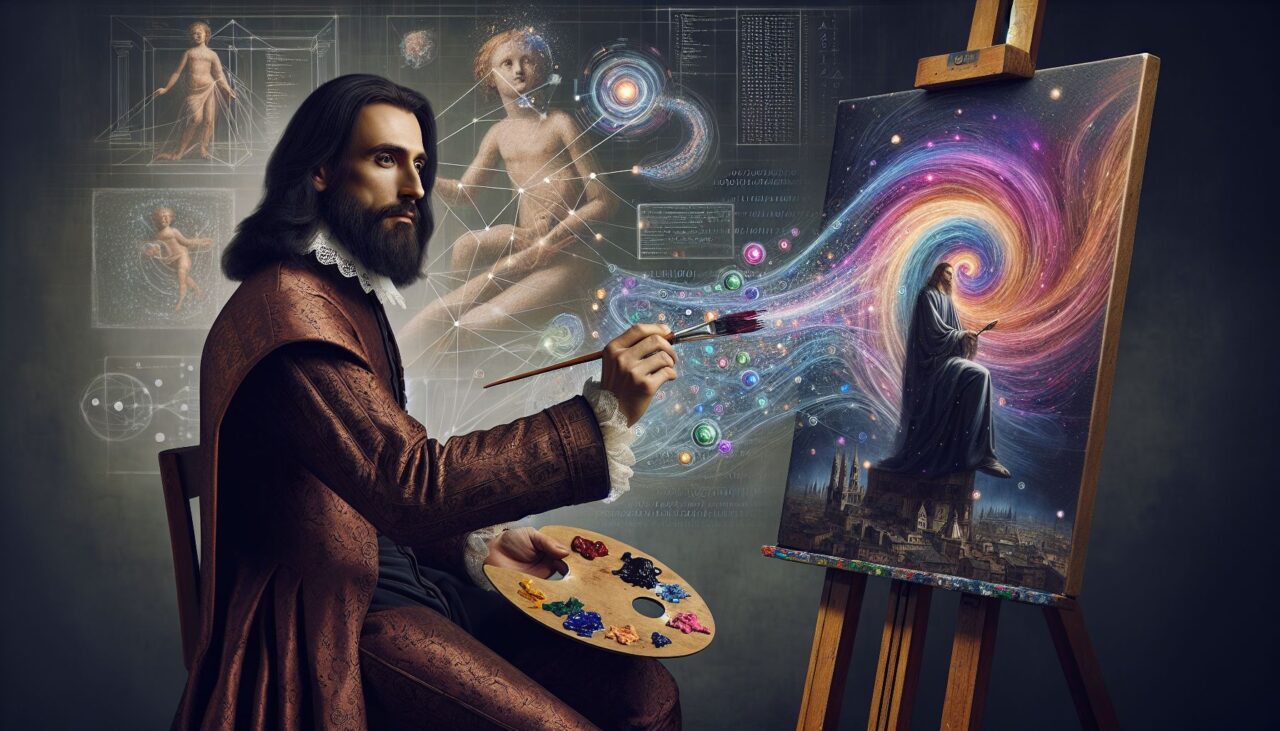
Ah, the creative arts, the one bastion we humans thought robots could never conquer. As an artist, I’ve swirled paints till my fingers were a colorful mess and crafted melodies that could make a stone weep. Yet here we are, watching Artificial Intelligence transform from just another tool into something that creates alongside us. Today, let’s look at how AI is making its way into the creative world and what that means for artists like us.
The Art of Bits and Bytes: AI’s Foray into Visual Arts
Remember when a computer making art seemed about as likely as a cat reciting Shakespeare? Those days are over. AI artists like DALL-E, Midjourney, and RunwayML aren’t just doodling around anymore. They’re creating real art. These systems study millions of images, learn artistic styles from different eras, and generate pieces that range from hauntingly beautiful to completely abstract and weird.
Breaking the Canvas Ceiling
What’s interesting about AI in visual arts is how it creates without any hang-ups. We human artists get stuck sometimes, limited by our own experiences and what we think is possible. AI doesn’t have those mental blocks. It can dream up entire worlds that make no logical sense but somehow work perfectly. The creative options feel infinite.
A Renaissance for Creation
The really exciting part is what happens when human artists work with AI. I tried this myself recently. You know that feeling when you’re staring at a blank canvas and your brain just won’t cooperate? AI can jump in with unexpected colors or strange shapes that suddenly spark an idea. It’s like having a creative partner who never gets tired and always has something new to suggest.
AI and Music: The Algorithmic Symphony
Move over Beethoven. AI composers are here now. Algorithms create symphonies, make those lo-fi beats for YouTube study playlists, and even generate pop songs that make you wonder, “Wait, this came from a computer?” Well, yes and no.
Coding Chords and Verses
AI in music isn’t just about making catchy tunes. It’s making music creation accessible to everyone. Tools like Amper Music and OpenAI’s MuseNet let anyone experiment with composing, even if they can’t read a note of music. It removes the barriers that kept people from trying. It’s like being able to cook a gourmet meal without any training because you have the perfect recipe assistant.
The Existential Jam
As someone who’s spent countless hours playing guitar, I was honestly worried at first. Would AI music be too robotic, missing that human soul? But after hearing compositions that actually moved me, that made me want to dance or gave me chills, I realized something. Maybe AI isn’t trying to replace human emotion in music. Maybe it’s finding new ways to express it.
The Written Word: AI’s Literary Pursuit
Now we get to writing, which hits close to home for me. It’s both thrilling and slightly terrifying to watch AI like GPT-4 create prose. Whether it’s writing poetry, screenplays, or articles like this one, AI is changing how we think about the written word.
The Typing Machine
Let’s be clear about one thing. AI hasn’t become the next Shakespeare yet. But the progress is genuinely impressive. It learns from massive amounts of text, picking up on language patterns, style, and context. Still, there’s always a human involved, steering the direction, adding personal insights, and making sure everything makes sense. AI might provide the raw material, but humans shape it into something meaningful.
Copilot, Not Captain
What I love about AI writing tools isn’t the final output, it’s how they change the creative process. I bounce ideas back and forth with AI, get unexpected suggestions, and explore thoughts I might not have considered. It’s like having a brainstorming partner who’s always available, never gets cranky, and brings a completely different perspective to every conversation.
Future Landscapes: The Emotional Palette
So what’s next for AI in creative arts? Here’s what I think: AI won’t replace human creativity. Instead, it’s becoming a powerful tool that makes our artistic work stronger and more interesting.
A Tool for Tomorrow
I see AI as adding a new color to our artistic toolkit. It gives creators ways to execute ideas that seemed impossible before, opening doors to art forms we haven’t even imagined yet. Rather than fearing AI’s role in creativity, we should embrace working alongside it and see where this partnership takes us.
A New Dawn
We’re watching creativity and technology merge in real time. Whether you’re an artist, musician, writer, or just someone who loves art, think about how AI might enhance what you do. Let it inspire new ideas, push your writing in unexpected directions, or help you compose that song you’ve been humming but couldn’t quite finish.
In the end, this isn’t about AI versus humans. It’s about AI working with us. Here’s to reimagining what’s possible in art, music, and writing. Tomorrow’s creative work won’t just be something we look at or listen to, it will be something we experience deeply. And we’ll create it together with our AI collaborators.
That’s all from me today. I’m heading off to work with my AI partner on our next project, maybe that novel I keep talking about. Stay creative, and don’t be afraid to experiment!