Rigorous political analysis for readers who want to understand the system, not just react to it.

Author: Laurie Banks Page 13 of 15

How Economic Inequality Reshapes Your Community’s Future

The Wealth Concentration Reality in Your Neighborhood

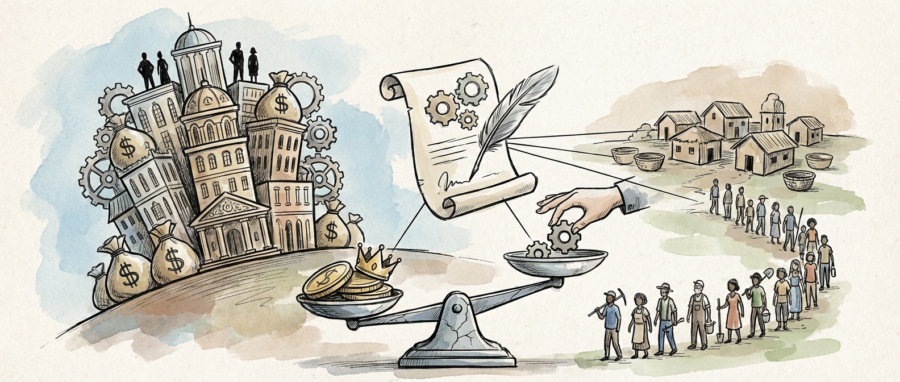
Walk through any American suburb today and the numbers behind economic inequality take on concrete form. The modest ranch house where a teacher raised three children now sells for twice what a similar educator could afford. The corner coffee shop that once employed high school students at decent wages has been replaced by an app-driven delivery hub where drivers earn unpredictable gig payments. These local changes reflect a broader transformation: across developed nations, the wealthiest one percent now controls more assets than the bottom sixty percent of households combined.

How Economic Inequality Reshapes Your Community's Future
How Economic Inequality Reshapes Your Community’s Future

This concentration shows up differently in each community, but the patterns stay the same. In suburban Phoenix, young families delay buying homes while their parents’ property values soar beyond reach. In rural Ohio, family farms face pressure to sell to agribusiness conglomerates as operating costs outpace what small-scale operations can bring in. Urban neighborhoods from Portland to Birmingham watch longtime residents get pushed out by investors who buy up multiple properties to park their money. The Inequality.org data shows how these local experiences connect to national trends that are rewriting the fundamental bargain of American economic life.

Illustration for How Economic Inequality Reshapes Your Community's Future
Illustration for How Economic Inequality Reshapes Your Community’s Future

Housing Costs Squeeze Local Families

Housing expenses now eat up a bigger chunk of household budgets than we’ve seen in four decades across English-speaking countries. For American families, this means mortgage payments and rent that would have been luxury spending for previous generations now count as basic survival costs. A firefighter in Austin finds that the modest home her parents bought on a single income now requires two professional salaries to afford. A construction worker in Denver discovers that the apartment he rented as a young adult now costs more than his current mortgage payment would be, if he could even qualify for one.

Local governments face impossible choices as housing costs spiral beyond middle-class reach. Zoning decisions that once balanced neighborhood character with growth now determine which families can stay in communities where they work. Teachers, police officers, and city employees increasingly commute from distant suburbs, creating staffing problems for basic services. Small businesses struggle to attract workers who can’t afford to live nearby, while service industry employees patch together multiple gig jobs to cover rent that eats sixty or seventy percent of their income.

These housing pressures create ripple effects throughout local economies. School districts lose enrollment as families move to cheaper areas, cutting per-pupil funding. Local retailers face declining foot traffic as residents spend their extra money on housing costs rather than community businesses. City tax bases stagnate when productive workers relocate to areas where housing stays affordable, leaving behind either very wealthy residents or very poor ones. Neither group generates the middle-income tax revenue that funds parks, libraries, and keeping the roads fixed.

The Gig Economy’s Local Impact

The job market in communities across America increasingly revolves around platform work that offers flexibility at the cost of traditional job security. Uber and Lyft drivers navigate your local streets, DoorDash couriers deliver to your neighbors, and TaskRabbit workers assemble furniture in nearby homes. This gig economy expansion reflects broader labor market changes, but regulatory battles from California to the European Union show that communities can shape how these new work arrangements actually function.

California’s AB5 legislation tried to reclassify many gig workers as employees, triggering massive corporate spending to overturn the measure through Proposition 22. Similar regulatory discussions play out across Australia and throughout European Union member states, where policymakers wrestle with balancing worker protections against platform innovation. These decisions directly affect local workers who increasingly depend on gig income to supplement traditional jobs or replace work that disappeared during economic transitions.

Local communities see the practical consequences of gig economy growth in their daily routines. Restaurant workers pick up delivery shifts to cover rent increases. Retired teachers drive for ride-sharing companies to supplement inadequate pensions. College students provide freelance services through platforms that offer immediate income but no benefits or long-term career development. The spread of these arrangements reflects both increased economic pressure on households and the failure of traditional employment to provide enough income security for middle-class life.

Policy Responses Take Shape

Governments at multiple levels are experimenting with policy responses that could reshape local economic conditions. Universal Basic Income pilot programs, following successful trials in Finland, Wales, and Kenya, now expand to more regions as policymakers test whether direct cash assistance can address inequality better than traditional welfare systems. These programs offer monthly payments to residents regardless of employment status, potentially providing the income security that gig work and housing costs have destroyed.

Wealth taxation proposals gain momentum in France and Spain, while several American states consider similar measures targeting high-net-worth residents. These initiatives aim to slow wealth concentration while funding public investments in education, infrastructure, and social services that benefit broader communities. Local implementation varies significantly, with some jurisdictions focusing on property tax reforms while others explore new revenue streams from capital gains or inheritance taxes.

The Brookings Institution research suggests that policy effectiveness depends largely on coordinated implementation across multiple government levels. Local zoning reforms can address housing supply constraints, but federal monetary policy influences mortgage rates and investment flows. State-level minimum wage increases can boost worker incomes, but immigration policy affects labor market competition. Regional cooperation becomes essential when addressing inequality drivers that cross city boundaries.

Generational Wealth and Future Prospects

Perhaps nowhere does economic inequality hit home more directly than in the growing importance of family wealth for young adults’ life prospects. Generational wealth transfer increasingly determines who can afford college without crushing debt, who can buy homes in their twenties, and who can take career risks like starting businesses or pursuing creative work. Families with built-up assets pass advantages to their children, while families without wealth watch their children face steeper barriers to middle-class stability.

This dynamic plays out differently across communities based on their historical wealth accumulation patterns. Neighborhoods that benefited from post-war suburban development and decades of property appreciation can transfer substantial assets to the next generation. Areas that experienced deindustrialization, discriminatory lending practices, or economic disruption often lack comparable wealth to pass down. The result amplifies existing regional inequalities while creating new barriers for talented individuals whose families can’t provide financial support during the career-building years that matter most.

Understanding how economic inequality shapes your community requires examining these interconnected forces rather than treating them as separate issues. Housing costs, employment patterns, policy responses, and generational wealth transfer create feedback loops that either lock in inequality or provide opportunities for broader prosperity. Getting involved locally with these challenges offers real ways for residents to influence outcomes that will determine their community’s economic future for decades to come.
Why Your Representative Votes for Roads in Alaska While Your Bridge Crumbles

The Paradox of Federal Spending That Makes Perfect Sense

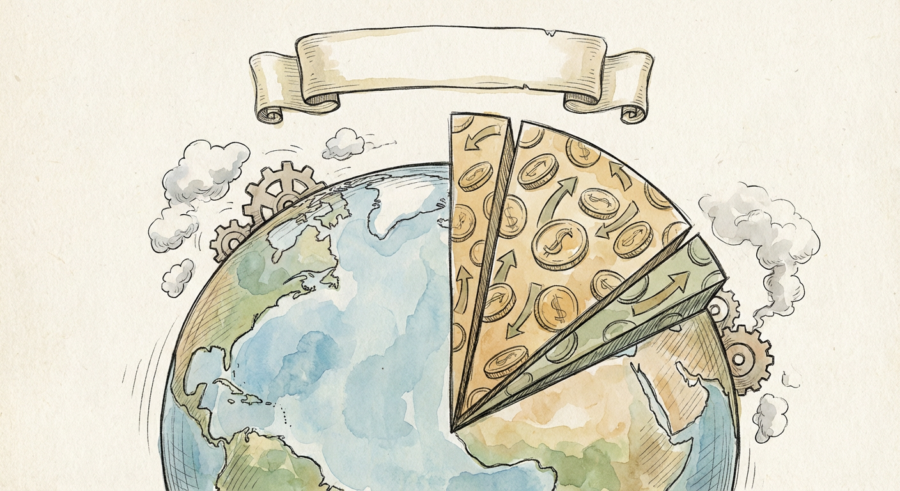
Every spring, members of Congress get a thick binder detailing how federal dollars flow through their districts. Transportation infrastructure gets $87 billion, education receives $79 billion, and defense contractors collect $816 billion. Yet the representative from Ohio votes enthusiastically for highway projects in Montana, while the senator from Vermont champions agricultural subsidies that mostly benefit Kansas wheat farmers. This isn’t legislative confusion or misplaced altruism. It’s how American fiscal policy was deliberately built to solve a problem most citizens never think about: how to fund national priorities while keeping politicians accountable to local voters.

The federal budget works on three levels that create this apparent contradiction. Formula-based spending distributes money according to set criteria, like population density or unemployment rates. Project-based appropriations fund specific initiatives, from rural broadband expansion to urban transit systems. Block grants give states flexible funding for broad categories like healthcare or housing. Each approach serves different political and practical purposes, creating a system where rational self-interest produces outcomes that can look completely irrational from any single angle.

Consider the Federal Highway Trust Fund, which collects gasoline taxes nationally and redistributes them based on lane-miles, vehicle registrations, and fuel consumption patterns. Alaska receives approximately $2.50 in highway funding for every dollar its residents contribute in gas taxes, while Texas receives about $0.95 per dollar contributed. This isn’t political favoritism. It reflects the higher per-mile cost of maintaining roads in sparsely populated terrain and the national interest in connecting remote regions to the broader economy.

The Mathematics of Political Survival

The electoral logic behind federal spending creates predictable patterns that often confuse casual observers. Representatives must balance three competing demands: securing benefits for their specific constituency, advancing their party’s broader policy agenda, and maintaining the relationships necessary for future legislative success. This triangle of pressures explains why deficit hawks vote for farm bills and urban liberals support rural development programs.

Take the 2021 Infrastructure Investment and Jobs Act, which passed with bipartisan support despite deep partisan divisions on most other issues. The bill allocated $550 billion in new spending across all 50 states, with specific provisions for everything from Appalachian highway improvements to West Coast port modernization. Montana Senator Steve Daines, a fiscal conservative who regularly criticizes government spending, voted for the package after securing $2.8 billion for his state’s roads and bridges. This wasn’t hypocrisy. It was the rational calculation that his constituents needed infrastructure improvements regardless of his ideological preferences about federal spending levels.

The committee system amplifies these dynamics through specialized knowledge and reciprocal relationships. Agriculture Committee members develop expertise in crop insurance and rural development, while Armed Services Committee members understand defense procurement and base operations. When the Transportation Committee proposes increasing Amtrak funding, members typically defer to their colleagues’ specialized knowledge, expecting similar deference when their own committee addresses issues within their expertise.

How Money Actually Moves Through Government

Federal spending follows pathways that rarely match public understanding of how government works. Mandatory spending, which includes Social Security, Medicare, and interest payments, consumes roughly 75% of the federal budget without requiring annual congressional approval. Discretionary spending covers everything else: defense, education, infrastructure, scientific research, and federal agency operations. This fundamental division means that most budget debates focus on the smaller portion of federal expenditures while the larger portion operates on autopilot.

Within discretionary spending, the appropriations process creates its own complex geography. The Department of Health and Human Services distributes community health center funding through a formula based on poverty rates and medically underserved populations. The Department of Education allocates Title I funding according to census data on low-income students. The Department of Agriculture provides rural development loans based on population density and economic distress indicators. Each formula embeds specific policy priorities into mathematical calculations that determine how billions of dollars flow to communities across the country.

Earmarks, which returned to congressional practice in 2021 after a decade-long moratorium, represent the most visible form of geographically targeted spending. The 2022 appropriations bills included approximately $9 billion in earmarks, funding projects from flood control in Louisiana to scientific research facilities in New York. These targeted appropriations make up less than 1% of federal spending but generate outsized attention because they explicitly connect specific legislators to specific local benefits.

The Strategic Logic Behind Seemingly Illogical Choices

Understanding why legislators support spending that doesn’t directly benefit their districts requires appreciating the long-term strategic thinking that guides effective political careers. Building coalitions for major legislation often requires assembling geographically diverse support, which means supporting other members’ priorities in exchange for support on your own initiatives. The 2008 financial crisis response, the 2020 pandemic relief packages, and the 2021 infrastructure bill all succeeded because legislators pointed to specific benefits for their constituents while advancing broader national objectives.

Regional economic connections also drive apparently counterintuitive voting patterns. Manufacturing states benefit from agricultural prosperity because farmers purchase equipment and transportation services. Coastal ports depend on inland infrastructure to move goods efficiently. Energy-producing regions require skilled workers who often come from states with strong educational systems. These economic connections create shared interests that transcend traditional geographic and partisan boundaries.

The defense budget illustrates these dynamics particularly clearly. Major weapons systems involve suppliers from dozens of states, creating constituencies for specific programs that cut across partisan lines. The F-35 fighter program, despite cost overruns and technical problems, maintains strong congressional support because final assembly occurs in Texas, engines are manufactured in Connecticut, and components come from suppliers in 45 states. Critics argue this is inefficient political engineering, but supporters contend it ensures broad-based support for maintaining America’s defense industrial capacity.

What This Means for Democratic Accountability

The complexity of federal fiscal policy creates genuine challenges for democratic oversight and citizen engagement. Voters struggle to connect their representatives’ votes to concrete outcomes, while representatives can claim credit for popular spending while deflecting responsibility for unpopular taxes or deficits. This information gap between elected officials and constituents shapes political incentives in ways that can undermine both fiscal responsibility and democratic accountability.

Yet the same complexity that creates accountability challenges also enables the kind of large-scale collective action that pure local democracy might not achieve. Climate change mitigation, pandemic response, infrastructure modernization, and national defense all require coordination across jurisdictions and interest groups. The federal budget process, despite its apparent inefficiencies, provides mechanisms for addressing problems that exceed the capacity of state and local governments or private markets.

The next time you see your representative voting for spending that seems to have nothing to do with your community’s immediate needs, consider the broader system within which that vote occurs. Democratic governance of a continental nation requires mechanisms for balancing local accountability with national coordination, immediate needs with long-term investments, and political sustainability with policy effectiveness. Understanding these trade-offs won’t make fiscal policy less complex, but it might make the complexity feel less arbitrary.

Why the House Judiciary Committee’s Subpoena Wars Reveal a Deeper Constitutional Crisis

The Theater of Oversight

When House Judiciary Committee Chairman Jim Jordan gaveled in last month’s hearing on DOJ weaponization, something remarkable happened in the opening minutes. Ranking Member Jerry Nadler interrupted Jordan’s statement not once, but three times, citing procedural violations that most viewers couldn’t understand. The exchange wasn’t about the substance of the hearing. It was about who controls the committee’s agenda, witness list, and even basic scheduling. This seemingly arcane procedural warfare shows a fundamental truth about congressional committees that civics textbooks rarely capture: they are simultaneously legal institutions with formal rules and political battlegrounds where those rules bend under pressure.

Congressional committees occupy a peculiar constitutional space. The Constitution grants Congress broad investigative powers, but it says nothing about how those powers should be organized or exercised. The committee system emerged organically in the early 19th century as a practical necessity. By 1946, the Legislative Reorganization Act formalized much of what we recognize today. Yet this formalization created an inherent tension between committees as deliberative bodies seeking truth and committees as partisan instruments advancing political narratives.

The Mechanics of Institutional Power

Committee chairs wield extraordinary procedural authority that casual observers rarely appreciate. Take the House Oversight Committee’s investigation into Hunter Biden’s laptop. Chair James Comer can unilaterally issue subpoenas, set hearing schedules, and control witness testimony time limits. Ranking Member Jamie Raskin can request witnesses and documents, but Comer can simply refuse. This asymmetry isn’t accidental. It reflects the majority party’s electoral mandate, but it also transforms committees from collaborative fact-finding bodies into extensions of partisan strategy.

The subpoena power illustrates this dynamic perfectly. Subpoenas carry the full force of law, backed by Congress’s contempt authority and ultimately by federal marshals. Yet the decision to issue one often depends less on legal necessity than on political calculation. When the House Select Committee on January 6th subpoenaed Trump administration officials, it triggered a constitutional crisis about executive privilege. When House Republicans later subpoenaed Hunter Biden, it raised different questions about the scope of legitimate oversight versus political harassment.

Committee staff play an equally important but invisible role. Professional staff attorneys draft questions, analyze documents, and shape narratives that members then present publicly. The House Intelligence Committee employs roughly sixty professional staff members with security clearances, legal training, and subject matter expertise that far exceeds most members’ knowledge. These staffers often determine which documents get highlighted, which witnesses get called, and which legal theories get advanced. Yet they remain largely anonymous, accountable primarily to committee leadership rather than to voters.

The Illusion of Bipartisan Deliberation

Committee hearings present themselves as deliberative exercises, but they increasingly function as political theater with predetermined outcomes. Consider the Senate Judiciary Committee’s Supreme Court confirmation hearings. Both parties arrive with prepared scripts, choreographed questions, and predetermined positions. Republican senators use their time to highlight the nominee’s qualifications and judicial philosophy. Democratic senators focus on controversial past decisions and hypothetical scenarios. The hearing format creates an illusion of dialogue, but actual persuasion rarely occurs.

This theatrical quality extends to witness selection and questioning strategies. When the House Energy and Commerce Committee investigated social media companies, Republicans called witnesses who emphasized free speech concerns while Democrats featured experts on misinformation and hate speech. Both sides knew the outcome before the first question was asked. The hearing had multiple audiences simultaneously: committee members performing for their bases, witnesses advancing their organizations’ interests, and media outlets seeking dramatic soundbites.

The minority party’s limited tools create more distortions. Since they cannot control the agenda or witness list, minority members often resort to procedural objections, dramatic walkouts, or inflammatory rhetoric designed to generate media coverage. This dynamic incentivizes theatrical behavior over substantive inquiry, transforming committees into campaign venues rather than governing institutions.

The Weaponization of Investigation

Modern congressional investigations increasingly advance political rather than legislative purposes, fundamentally altering committee dynamics. The House Select Committee to Investigate the January 6th Attack exemplifies this trend. Democrats designed the committee structure to exclude Republican participation, appointed Republican critics of Trump as minority voices, and structured the investigation around a clear narrative framework. The committee produced compelling television and important historical documentation, but it operated more like a prosecutor’s office than a traditional legislative body.

Republican committees have responded in kind. The House Judiciary Committee’s investigation into DOJ “weaponization” explicitly frames law enforcement as a partisan actor requiring congressional oversight. This framing predetermines investigative conclusions while maintaining procedural legitimacy. Committee members aren’t seeking evidence to inform legislative solutions. They’re building political narratives to justify predetermined positions about federal law enforcement.

This prosecutorial approach transforms the traditional relationship between committees and executive agencies. Instead of seeking information to improve government operations or draft better legislation, committees increasingly position themselves as adversaries of the departments they oversee. Career civil servants find themselves caught between conflicting loyalties: professional obligations to their agencies and legal obligations to respond to congressional subpoenas.

Constitutional Crisis in Committee Form

These dynamics reveal a deeper constitutional problem about separation of powers in an era of heightened polarization. Congressional committees derive their authority from Article I’s legislative powers, but they increasingly function as quasi-judicial bodies investigating potential crimes or constitutional violations. This role confusion creates conflicts with executive privilege, judicial oversight, and basic due process principles that the Framers never anticipated.

The courts have struggled to resolve these tensions because they involve political questions that resist judicial resolution. When former Trump advisor Steve Bannon refused to comply with a House committee subpoena, it triggered a criminal prosecution that raised fundamental questions about congressional authority, executive privilege, and the role of courts in resolving interbranch disputes. The resulting legal framework remains unclear, creating uncertainty for congressional investigations going forward.

Perhaps most troubling, committee investigations now routinely target private citizens with limited recourse. Unlike criminal defendants, congressional witnesses have no right to counsel during depositions, no protection against self-incrimination in civil contexts, and no guarantee that their testimony won’t be selectively released for political purposes. This creates an accountability gap where congressional committees can exercise quasi-prosecutorial power without prosecutorial constraints.

Understanding these committee dynamics requires acknowledging an uncomfortable reality: the same institutional features that enable effective oversight in normal times become weapons of political warfare during periods of intense polarization. The question facing American democracy isn’t whether congressional committees should have investigative power, but whether constitutional norms and procedural safeguards can constrain that power when traditional political incentives fail. The answer will likely determine whether committees continue their constitutional function or become permanent instruments of partisan conflict.

Climate policy and the green transition debate: Political economy

The evidence, examined carefully, tells a more specific story. Climate policy and the green transition debate deserve more careful attention than the typical coverage provides, and the reason is not complicated once you know where to look.

The data worth focusing on is not the headline number but, when viewed through the lens of political economy, is carbon pricing now covering 23 percent of global emissions under various schemes. The investigative read of the situation is also the more accurate one once you examine what the evidence actually shows.

Climate policy and the green transition debate: Political economy

The Economy: Setting the Terms

When the IPCC Sixth Assessment Report sets 2030 as a critical decision point, this isn’t just another data point in climate policy discussions. It’s the structural condition that makes everything else in this analysis make sense. This kind of context doesn’t age quickly. The conditions that created it have been building for years, and their convergence is what makes this moment different from previous ones that looked similar from a distance.

Carbon pricing now covers 23 percent of global emissions under various schemes, while green industrial policy is driving massive public investment in the US, EU, and China. When you look at both together, a pattern emerges that Carbon Brief climate analysis has been tracking from the inside: the conditions are more durable than they first appear, and the implications reach further than the immediate headlines suggest.

To understand why this matters, it helps to compare what was true three years ago versus what is true now. The change isn’t simply quantitative, it’s qualitative. The participants, the infrastructure, and the incentive structures have all shifted in ways that build on each other rather than cancel out. That compounding effect is the most important element to track.

What makes this moment worth examining carefully isn’t the novelty but the confirmation. The underlying dynamics have been visible for some time. What’s new is that they’ve reached a threshold where ignoring them requires active effort rather than simple inattention. That threshold crossing is the real event, not the underlying movement that produced it.

The just transition debates highlighting unequal burden on fossil fuel communities are part of that same picture. These elements don’t exist in separate silos, they’re reinforcing conditions in the same structural shift.

Follow the Money: The Analysis

Just transition debates highlighting unequal burden on fossil fuel communities is where the analysis gets more specific. The surface reading is accessible and not wrong, but it misses the mechanism. And the mechanism is where the practical insight lives. The data worth focusing on isn’t the headline number but the mechanism: a loss and damage fund for vulnerable nations agreed at COP27 but underfunded. Understanding it changes what you do with the information.

Consider what a loss and damage fund for vulnerable nations agreed at COP27 but underfunded represents in context. It’s not a correlation that happened to appear, it’s a downstream consequence of structural factors that have been compounding. Previous readings of similar situations failed because they treated the symptom as the cause. The structural account is less satisfying as a headline but more useful as an analytical tool.

The comparison to prior cycles is helpful precisely because of where it breaks down. Apparently similar conditions resolved differently in previous iterations because the foundation was different. What corporate net-zero pledges under scrutiny for greenwashing claims represents is a foundation change, the kind that alters how flexible the system is rather than just its current value. Recognizing that distinction is what separates analysis from pattern-matching.

The skeptical counterargument deserves honest engagement: prior moments with similar surface characteristics didn’t produce the outcomes that seemed logical at the time. That history is real. What’s different now is corporate net-zero pledges under scrutiny for greenwashing claims, which isn’t a minor variable, it’s the infrastructure condition that previous cycles lacked. Infrastructure changes tend to persist in ways that sentiment-driven changes don’t. Climate Policy Initiative is one source tracking this dimension with the rigor it requires.

There’s also a distributional question that often goes unaddressed in coverage of climate policy and the green transition debate: who captures the value created by these shifts, and who absorbs the disruption costs? The big picture can be positive while the distribution is uneven in ways that matter enormously to specific participants. Keeping that distributional lens in view is part of reading the situation clearly rather than simply optimistically.

Implications: What This Means If You Care About Lobbying and Industry Influence

The implications of climate policy and the green transition debate extend beyond the immediate context. The IPCC Sixth Assessment Report setting 2030 as a critical decision point, combined with the structural conditions described above, creates a situation where adjacent fields, decisions, and communities are affected in ways that aren’t always visible from inside the primary story. The second-order effects are frequently more important than the first-order ones, and they’re where careful attention pays the highest returns.

The frame that matters here, and this is where the analysis departs from mainstream coverage, is that green industrial policy driving massive public investment in the US, EU, and China is a leading indicator rather than a lagging one. The people positioned to respond to what this signals, rather than to what it confirms, are the ones who will be less surprised by what follows.

The practical response depends heavily on your position relative to the dynamics at play. For those closest to the core of climate policy and the green transition debate, the implications are immediate and operational. For those at greater distance, the implications are strategic, a matter of understanding which adjacent pressures are building and which assumed stabilities are more fragile than they appear.

The practical question isn’t whether to engage with these dynamics but how. The answer depends on context, on what role you occupy relative to climate policy and the green transition debate and what your actual decision horizon is. But the first step is the same regardless: accurate understanding of what’s actually happening rather than what the most available narrative says is happening.

A few concrete observations are worth separating out from the broader analysis. First: carbon pricing now covering 23 percent of global emissions under various schemes isn’t a temporary condition, it’s a new baseline. Second: the loss and damage fund for vulnerable nations agreed at COP27 but underfunded suggests that the adjustment period isn’t over. Third, and most important: the organizations and individuals who are treating the current moment as a new steady state rather than a transition are making a categorization error that will be costly to unwind later.

The Case Against: What the Critics Get Right

Intellectual honesty requires acknowledging the strongest counterarguments, not just the weakest ones. The case against the optimistic reading of climate policy and the green transition debate isn’t trivial. There are structural vulnerabilities in the current picture that deserve direct engagement rather than dismissal.

The most serious objection is about sustainability. Green industrial policy driving massive public investment in the US, EU, and China can be read not as a foundation but as a ceiling, a point beyond which growth becomes self-limiting because of the very dynamics that produced it. If the current state has already incorporated most of the available supply of early-adopting participants, the remaining growth curve may be structurally shallower than the recent trajectory implies.

There’s also the policy and regulatory dimension. The IPCC Sixth Assessment Report setting 2030 as a critical decision point describes a condition in a relatively permissive environment. Regulatory responses to the scale implied by these numbers aren’t inevitable, but they’re not implausible either. The organizations that are planning as though the current regulatory environment is permanent are making an assumption that the history of fast-growing sectors doesn’t support.

The rebuttal to these concerns isn’t that they’re wrong, it’s that they’re already partially priced into the current state of the field. Corporate net-zero pledges under scrutiny for greenwashing claims reflects an environment where participants are already adapting to constraints rather than operating in an unconstrained space. The adjustment capacity of the ecosystem is higher than a purely top-down view of the risks suggests.

Looking Forward

The trajectory here is clearer than the pace. Making predictions about when specific thresholds will be crossed is genuinely difficult, and anyone claiming precision about timelines should be treated with skepticism. But the direction, toward the IPCC Sixth Assessment Report’s 2030 timeline and continued development of the conditions described above, is supported by the evidence in a way that doesn’t depend on a single variable going right.

Corporate net-zero pledges under scrutiny for greenwashing claims is the variable to watch as the leading indicator. Historical patterns suggest it moves first, with broader metrics following with some lag. This doesn’t make the outcome certain, but it makes it readable, and readability is the precondition for good decisions.

Three questions are worth holding as the story develops. First: are the structural conditions that enabled the current state durable, or are they cyclical? Second: who is positioned to benefit from the next phase, and does that differ materially from who benefited in the current phase? Third: what would a clean falsification of the optimistic thesis look like, and is there any evidence of that signal emerging? These questions don’t need answers today, but having asked them changes what you notice in the months ahead.

The analysis holds up under scrutiny, which is the only test that matters. The current moment in climate policy and the green transition debate is one where the people who have built an accurate model of the underlying dynamics are better positioned than the people who are relying on the surface story. Building that model isn’t a quick task, but it’s a doable one, and this analysis is intended as one input into it.

What are we missing in the financial trail? Add sources if you have them.

The Wealth Concentration Crisis: How Policy Makers Are Responding to Historic Economic Inequality

The Scale of Modern Wealth Concentration

Economic inequality has hit levels we haven’t seen since the Gilded Age, and it’s completely changing politics across developed nations. In most OECD countries, the richest one percent now controls more total wealth than the bottom sixty percent combined. That’s a massive shift from the relatively balanced distribution we saw after World War II through the 1970s.

The Wealth Concentration Crisis: How Policy Makers Are Responding to Historic Economic Inequality

This goes way beyond abstract statistics. When such a tiny slice of the population controls so much money, it ripples through everything: democratic institutions, job markets, your chances of moving up in life. Inequality.org data shows how this concentration got turbo-charged during the 2008 financial crisis and again during COVID, as asset prices soared while millions of workers watched their paychecks stagnate.

Political scientists are starting to see wealth concentration as a real threat to democracy itself. When economic power gets this concentrated, it inevitably becomes political power through campaign donations, lobbying spending, and the revolving door between private wealth and government jobs. You get this feedback loop where concentrated wealth shapes policy in ways that make the rich even richer.

Wealth Taxes Gain Political Momentum

Governments around the world are now seriously looking at wealth taxes as a direct way to tackle extreme concentration. France has tried various forms of wealth taxation over the past decade, though with mixed results and real concerns about rich people moving their money elsewhere. Spain recently brought in a temporary wealth tax that’s raised substantial revenue while sparking fierce debate about long-term economic competitiveness.

In the United States, several states are pushing wealth tax proposals even though there are constitutional questions about whether they can actually do this. California, New York, and Washington have all seen legislative proposals that would tax annual net worth above certain thresholds, typically starting at ten million dollars. These state-level efforts represent a real shift in American tax policy discussions, which have traditionally focused on income and sales taxes.

The technical challenges are huge. Wealth assessment requires sophisticated ways to value assets, especially hard-to-price stuff like private company shares, real estate, and complex financial instruments. Administrative costs can be enormous, and wealthy people have proven pretty good at restructuring assets or just moving somewhere else to avoid these taxes. Still, the political momentum suggests growing public appetite for directly tackling wealth concentration rather than just trying to redistribute income after the fact.

Universal Basic Income Pilots Expand Globally

Universal Basic Income programs represent a completely different approach that’s also gaining steam, though with different reasoning than wealth taxes. After successful pilot programs in Finland, Wales, and Kenya, multiple governments are expanding UBI experiments to test whether no-strings-attached cash payments can address inequality’s root causes while keeping people motivated to work and maintaining economic productivity.

The Finnish experiment gave monthly payments to unemployed people and found modest improvements in mental health and life satisfaction without people significantly reducing their job searches. Wales launched a more comprehensive pilot giving payments to young people aging out of care systems, testing whether early intervention can prevent long-term economic marginalization. Kenya’s program, which sends direct cash transfers to rural communities, has shown positive effects on local economic development and kids staying in school.

These pilots operate in very different economic contexts, but they share a common theory: direct cash transfers might be more efficient than complex welfare bureaucracies while giving people more autonomy. Critics worry that UBI could make people less willing to work and prove too expensive at scale, but supporters argue that automation and economic disruption require completely rethinking how societies distribute economic security.

Housing Costs Drive Intergenerational Wealth Gaps

Housing costs have hit levels relative to median incomes that we haven’t seen in forty years across English-speaking countries. This directly feeds wealth inequality by preventing younger generations from building equity through homeownership while simultaneously making existing property owners richer through rising home values.

The political impact is huge. In Australia, Canada, and the United Kingdom, housing costs have become central campaign issues, with younger voters increasingly backing parties that promise major housing policy reforms. Property ownership has become the main way wealth gets passed between generations, creating a split society between those whose families own property and those who don’t.

Policy responses vary wildly. Some places have implemented foreign buyer taxes or vacant property fees to reduce speculative demand. Others focus on zoning reform and building more housing. Brookings Institution research suggests that housing policy has become inseparable from broader inequality concerns, since property values now make up the biggest chunk of middle-class wealth in most developed economies.

Gig Economy Regulation Reshapes Labor Markets

The rise of platform-based work has created new types of economic inequality while messing with traditional job classifications. Across the European Union, United Kingdom, California, and Australia, governments are wrestling with how to regulate companies that call workers independent contractors while exercising serious control over their working conditions and pay.

California’s Assembly Bill 5 tried to reclassify many gig workers as employees, which triggered a massive corporate campaign that resulted in Proposition 22, creating a weird hybrid classification system. The European Union is developing continent-wide regulations for platform workers, while the UK has taken a sector-by-sector approach through employment tribunal decisions. Australia is considering similar reforms through its industrial relations system.

These regulatory battles reveal basic tensions between traditional employment protections and new economic models. Platform companies argue that flexibility benefits both workers and consumers, while labor advocates say that misclassification lets companies avoid providing health insurance, workers’ compensation, and other benefits that full-time employees get. How these policy debates turn out will significantly influence how economic gains from technological innovation get distributed across society.

Understanding these connected policy responses requires recognizing how wealth concentration, housing costs, job classification, and social safety nets interact to shape individual economic outcomes. As political systems worldwide wrestle with these challenges, the specific policy combinations they choose will determine whether current inequality trends continue or start to reverse. The stakes go beyond economics to the basic question of whether democratic societies can maintain legitimacy amid such dramatic wealth gaps.

The Real Picture on Climate policy and the green transition debate

The evidence, examined carefully, tells a more specific story. Climate policy and the green transition debate deserve more careful attention than typical coverage provides, and the reason isn’t complicated once you know where to look.

The data worth focusing on isn’t the headline number but how local impacts translate. Carbon pricing now covers 23 percent of global emissions under various schemes. The grounded read of the situation is also more accurate once you examine what the evidence actually shows.

The Translation: Setting the Terms

The IPCC Sixth Assessment Report setting 2030 as a critical decision point isn’t just another data point in climate policy debates, it’s the structural condition that makes everything else in this analysis legible. Context like this doesn’t age quickly. The conditions that produced it have been building for years, and this convergence makes the current moment different from previous moments that looked similar from a distance.

Carbon pricing now covers 23 percent of global emissions under various schemes while green industrial policy drives massive public investment in the US, EU, and China. When you look at both together, a pattern emerges that Carbon Brief climate analysis has been covering from the inside: the conditions are more durable than they first appear, and the implications extend further than immediate headlines suggest.

To understand why this matters, look at what was true three years ago versus what’s true now. The change isn’t simply quantitative, it’s qualitative. The participants, infrastructure, and incentive structures have all shifted in ways that compound rather than cancel out. That compounding is the most important element to track.

What makes this moment worth examining carefully isn’t the novelty but the confirmation. The underlying dynamics have been visible for some time. What’s new is that they’ve reached a threshold where ignoring them requires active effort rather than simple inattention. That threshold crossing is the event, not the underlying movement that produced it.

Just transition debates highlighting unequal burdens on fossil fuel communities are part of that same picture. These elements don’t exist in separate silos, they’re reinforcing conditions in the same structural shift.

The Local Stakes: The Analysis

Just transition debates highlighting unequal burdens on fossil fuel communities are where the analysis gets more specific. The surface reading is accessible and not wrong, but it misses the mechanism. The mechanism is where practical insight lives. The data worth focusing on isn’t the headline number but the mechanism: the loss and damage fund for vulnerable nations agreed at COP27 remains underfunded, and understanding this changes what you do with the information.

Consider what that underfunded loss and damage fund represents in context. It’s not a correlation that happened to appear, it’s a downstream consequence of structural factors that have been compounding. Previous readings of similar situations failed because they treated the symptom as the cause. The structural account is less satisfying as a headline but more useful as an analytical tool.

The comparison to prior cycles is instructive precisely because of where it breaks down. Similar conditions resolved differently in previous iterations because the substrate was different. Corporate net-zero pledges now under scrutiny for greenwashing claims represent a substrate change, the kind that alters the elasticity of the system rather than just its current value. Recognizing that distinction separates analysis from pattern-matching.

The skeptical counterargument deserves honest engagement: prior moments with similar surface characteristics didn’t produce the outcomes that seemed logical at the time. That history is real. What’s different now are corporate net-zero pledges under scrutiny for greenwashing claims, which isn’t a minor variable but the infrastructure condition that previous cycles lacked. Infrastructure changes tend to be persistent in ways that sentiment-driven changes aren’t. Climate Policy Initiative is one source tracking this dimension with the rigor it requires.

There’s also a distributional question that often goes unaddressed in coverage of climate policy and green transition debates: who captures the value created by these shifts, and who absorbs the disruption costs? The aggregate picture can be positive while the distribution is uneven in ways that matter enormously to specific participants. Keeping that distributional lens in view is part of reading the situation clearly rather than simply optimistically.

Implications: What This Means If You Care About Policy on the ground

The implications of climate policy and green transition debates extend beyond the immediate context. The IPCC’s 2030 critical decision point combined with the structural conditions described above creates a situation where adjacent fields, decisions, and communities are affected in ways that aren’t always visible from inside the primary story. Second-order effects are frequently more important than first-order ones, and they’re where careful attention pays the highest returns.

The frame that matters here, and this is where the analysis departs from mainstream coverage, is that green industrial policy driving massive public investment in the US, EU, and China is a leading indicator rather than a lagging one. People positioned to respond to what this signals, rather than to what it confirms, are the ones who will be less surprised by what follows.

The practical response depends heavily on your position relative to the dynamics at play. For those closest to the core of climate policy and green transition debates, the implications are immediate and operational. For those at greater distance, the implications are strategic, a matter of understanding which adjacent pressures are building and which assumed stabilities are more fragile than they appear.

The practical question isn’t whether to engage with these dynamics but how. The answer depends on context, on what role you occupy relative to climate policy and green transition debates and what your actual decision horizon is. But the first step is the same regardless: accurate understanding of what’s actually happening rather than what the most available narrative says is happening.

A few concrete observations are worth separating out from the broader analysis. First: carbon pricing now covering 23 percent of global emissions under various schemes isn’t a temporary condition, it’s a new baseline. Second: the underfunded loss and damage fund for vulnerable nations agreed at COP27 suggests that the adjustment period isn’t over. Third, and most important: organizations and individuals who are treating the current moment as a new steady state rather than a transition are making a categorization error that will be costly to unwind later.

The Case Against: What the Critics Get Right

Intellectual honesty requires acknowledging the strongest counterarguments, not just the weakest ones. The case against the optimistic reading of climate policy and green transition debates isn’t trivial. There are structural vulnerabilities in the current picture that deserve direct engagement rather than dismissal.

The most serious objection is about sustainability. Green industrial policy driving massive public investment in the US, EU, and China can be read not as a foundation but as a ceiling, a point beyond which growth becomes self-limiting because of the very dynamics that produced it. If the current state has already incorporated most of the available supply of early-adopting participants, the remaining growth curve may be structurally shallower than the recent trajectory implies.

There’s also the policy and regulatory dimension. The IPCC’s 2030 critical decision point describes a condition in a relatively permissive environment. Regulatory responses to the scale implied by these numbers aren’t inevitable, but they’re not implausible either. Organizations that are planning as though the current regulatory environment is permanent are making an assumption that the history of fast-growing sectors doesn’t support.

The rebuttal to these concerns isn’t that they’re wrong, it’s that they’re already partially priced into the current state of the field. Corporate net-zero pledges under scrutiny for greenwashing claims reflect an environment where participants are already adapting to constraints rather than operating in an unconstrained space. The adjustment capacity of the ecosystem is higher than a purely top-down view of the risks suggests.

Looking Forward

The trajectory here is clearer than the pace. Making predictions about when specific thresholds will be crossed is genuinely difficult, and anyone claiming precision about timelines should be treated with skepticism. But the direction toward the IPCC’s 2030 critical decision point and continued development of the conditions described above is supported by evidence in a way that isn’t contingent on a single variable going right.

Corporate net-zero pledges under scrutiny for greenwashing claims is the variable to watch as the leading indicator. Historical patterns suggest it moves first, with broader metrics following with some lag. This doesn’t make the outcome certain, but it makes it legible, and legibility is the precondition for good decisions.

Three questions are worth holding as the story develops. First: are the structural conditions that enabled the current state durable, or are they cyclical? Second: who is positioned to benefit from the next phase, and does that differ materially from who benefited in the current phase? Third: what would a clean falsification of the optimistic thesis look like, and is there any evidence of that signal emerging? These questions don’t need answers today, but having asked them changes what you notice in the months ahead.

The analysis holds up under scrutiny, which is the only test that matters. The current moment in climate policy and green transition debates is one where people who have built an accurate model of the underlying dynamics are better positioned than those relying on the surface story. Building that model isn’t a quick task, but it’s a tractable one, and this analysis is intended as one input into it.

How is this landing where you are? Your local knowledge matters here.

Economic inequality and policy responses — An Honest Dialectical

Looking at the evidence carefully, it tells a specific story. Economic inequality and policy responses deserve more careful attention than typical coverage provides, and the reason isn’t complicated once you know where to look.

The data worth focusing on isn’t the headline number but wealth tax proposals gaining traction in France, Spain, and several US states. The honest read of the situation is also the more accurate one once you examine what the evidence actually shows.

The Argument: Setting the Terms

The top 1 percent holds more wealth than the bottom 60 percent combined in most OECD countries. This isn’t just a data point in economic inequality, it’s the structural condition that makes everything else in this analysis make sense. Context like this doesn’t age quickly. The conditions that produced it have been building for years, and this convergence makes the current moment different from previous moments that looked similar from a distance.

Wealth tax proposals are gaining traction in France, Spain, and several US states. UBI pilot programs are expanding following studies in Finland, Wales, and Kenya. When you look at both together, a pattern emerges that Inequality.org data has been covering from the inside: the conditions are more durable than they first appear, and the implications extend further than the immediate headline suggests.

To understand why this matters, it helps to compare what was true three years ago versus what’s true now. The change isn’t just quantitative, it’s qualitative. The participants, the infrastructure, and the incentive structures have all shifted in ways that compound rather than cancel out. That compounding is the most important element to track.

What makes this moment worth examining carefully isn’t the novelty but the confirmation. The underlying dynamics have been visible for some time. What’s new is that they’ve reached a threshold where ignoring them requires active effort rather than simple inattention. That threshold crossing is the event, not the underlying movement that produced it.

Housing costs as a share of income are at a 40-year high across English-speaking countries. This is part of that same picture. These elements don’t exist in separate silos, they’re reinforcing conditions in the same structural shift.

The Dissenting View: The Analysis

Housing costs as a share of income at 40-year highs across English-speaking countries is where the analysis gets more specific. The surface reading is accessible and not wrong, but it misses the mechanism. And the mechanism is where the practical insight lives. The data worth focusing on isn’t the headline number but gig economy regulation battles ongoing across the EU, UK, California, and Australia. Understanding this changes what you do with the information.

Consider what these gig economy regulation battles represent in context. This isn’t a correlation that happened to appear, it’s a downstream consequence of structural factors that have been compounding. Previous readings of similar situations failed because they treated the symptom as the cause. The structural account is less satisfying as a headline but more useful as an analytical tool.

The comparison to prior cycles is instructive precisely because of where it breaks down. Superficially similar conditions resolved differently in previous iterations because the substrate was different. What intergenerational wealth transfer becoming a dominant factor in life outcomes represents is a substrate change. The kind that alters the elasticity of the system rather than just its current value. Recognizing that distinction separates analysis from pattern-matching.

The skeptical counterargument deserves honest engagement: prior moments with similar surface characteristics didn’t produce the outcomes that seemed logical at the time. That history is real. What’s different now is intergenerational wealth transfer becoming the dominant factor in life outcomes, which isn’t a minor variable. It’s the infrastructure condition that previous cycles lacked. Infrastructure changes tend to be persistent in ways that sentiment-driven changes aren’t. Brookings Institution is one source tracking this dimension with the rigor it requires.

There’s also a distributional question that often goes unaddressed in coverage of economic inequality and policy responses: who captures the value created by these shifts, and who absorbs the disruption costs? The aggregate picture can be positive while the distribution is uneven in ways that matter enormously to specific participants. Keeping that distributional lens in view is part of reading the situation clearly rather than simply optimistically.

Implications: What This Means If You Care About Contested Policy Debates

The implications of economic inequality and policy responses extend beyond the immediate context. The top 1 percent holding more wealth than the bottom 60 percent combined in most OECD countries, combined with the structural conditions described above, creates a situation where adjacent fields, decisions, and communities are affected in ways that aren’t always visible from inside the primary story. The second-order effects are frequently more important than the first-order ones, and they’re where careful attention pays the highest returns.

The frame that matters here, and this is where the analysis departs from mainstream coverage, is that UBI pilot programs expanding following Finland, Wales, and Kenya studies is a leading indicator rather than a lagging one. The people positioned to respond to what this signals, rather than to what it confirms, are the ones who will be less surprised by what follows.

The practical response depends heavily on your position relative to the dynamics at play. For those closest to the core of economic inequality and policy responses, the implications are immediate and operational. For those at greater distance, the implications are strategic, a matter of understanding which adjacent pressures are building and which assumed stabilities are more fragile than they appear.

The practical question isn’t whether to engage with these dynamics but how. The answer depends on context, on what role you occupy relative to economic inequality and policy responses and what your actual decision horizon is. But the first step is the same regardless: accurate understanding of what’s actually happening rather than what the most available narrative says is happening.

A few concrete observations are worth separating out from the broader analysis. First: wealth tax proposals gaining traction in France, Spain, and several US states isn’t a temporary condition, it’s a new baseline. Second: gig economy regulation battles ongoing across EU, UK, California, and Australia suggests that the adjustment period isn’t over. Third, and most important: the organizations and individuals who are treating the current moment as a new steady state rather than a transition are making a categorization error that will be costly to unwind later.

The Case Against: What the Critics Get Right

Intellectual honesty requires acknowledging the strongest counterarguments, not just the weakest ones. The case against the optimistic reading of economic inequality and policy responses isn’t trivial. There are structural vulnerabilities in the current picture that deserve direct engagement rather than dismissal.

The most serious objection is about sustainability. UBI pilot programs expanding following Finland, Wales, and Kenya studies can be read not as a foundation but as a ceiling, a point beyond which growth becomes self-limiting because of the very dynamics that produced it. If the current state has already incorporated most of the available supply of early-adopting participants, the remaining growth curve may be structurally shallower than the recent trajectory implies.

There’s also the policy and regulatory dimension. The top 1 percent holding more wealth than the bottom 60 percent combined in most OECD countries describes a condition in a relatively permissive environment. Regulatory responses to the scale implied by these numbers aren’t inevitable, but they’re not implausible either. The organizations that are planning as though the current regulatory environment is permanent are making an assumption that the history of fast-growing sectors doesn’t support.

The rebuttal to these concerns isn’t that they’re wrong, it’s that they’re already partially priced into the current state of the field. Intergenerational wealth transfer becoming the dominant factor in life outcomes reflects an environment where participants are already adapting to constraints rather than operating in an unconstrained space. The adjustment capacity of the ecosystem is higher than a purely top-down view of the risks suggests.

Looking Forward

The trajectory here is clearer than the pace. Making predictions about when specific thresholds will be crossed is genuinely difficult, and anyone claiming precision about timelines should be treated with skepticism. But the direction, toward the top 1 percent holding more wealth than the bottom 60 percent and continued development of the conditions described above, is supported by the evidence in a way that isn’t contingent on a single variable going right.

Intergenerational wealth transfer becoming the dominant factor in life outcomes is the variable to watch as the leading indicator. Historical patterns suggest it moves first, with broader metrics following with some lag. This doesn’t make the outcome certain, but it makes it legible. And legibility is the precondition for good decisions.

Three questions are worth holding as the story develops. First: are the structural conditions that enabled the current state durable, or are they cyclical? Second: who is positioned to benefit from the next phase, and does that differ materially from who benefited in the current phase? Third: what would a clean falsification of the optimistic thesis look like, and is there any evidence of that signal emerging? These questions don’t need answers today, but having asked them changes what you notice in the months ahead.

The analysis holds up under scrutiny, which is the only test that matters. The current moment in economic inequality and policy responses is one where the people who have built an accurate model of the underlying dynamics are better positioned than the people who are relying on the surface story. Building that model isn’t a quick task, but it’s a tractable one, and this analysis is intended as one input into it.

What did I miss in the steelman? Strengthen it below.

What Fact-checking and evidence review Reveals About Digital democracy and online political organising

The evidence, examined carefully, tells a more specific story. Digital democracy and online political organizing deserves more careful attention than typical coverage provides. The reason isn’t complicated once you know where to look.

The data worth focusing on isn’t the headline number. What matters is WhatsApp and Telegram groups driving local political mobilization globally. The cool read of the situation is also the more accurate one once you examine what the evidence actually shows.

The Review: Setting the Terms

72 percent of voters under 35 report social media as their primary political news source. This isn’t just a data point, it’s the structural condition that makes everything else in this analysis make sense. Context like this doesn’t age quickly. The conditions that produced it have been building for years, and the convergence is what makes the current moment distinct from previous moments that looked similar from a distance.

WhatsApp and Telegram groups drive local political mobilization globally. Algorithmic amplification of outrage content is documented across all major platforms. When you look at both together, a pattern emerges that Brennan Center democracy research has been covering from the inside. The conditions are more durable than they first appear. The implications extend further than the immediate headline suggests.

To understand why this matters, look at what was true three years ago versus what’s true now. The change isn’t simply quantitative, it’s qualitative. The participants, the infrastructure, and the incentive structures have all shifted in ways that compound rather than cancel out. That compounding is the most important element to track.

What makes this moment worth examining carefully isn’t the novelty but the confirmation. The underlying dynamics have been visible for some time. What’s new is that they’ve reached a threshold where ignoring them requires active effort rather than simple inattention. That threshold crossing is the event, not the underlying movement that produced it.

Foreign influence operations are active on X, Facebook, and TikTok ahead of every major election. This is part of that same picture. These elements don’t exist in separate silos, they’re reinforcing conditions in the same structural shift.

The Evidence Brief: The Analysis

Foreign influence operations active on X, Facebook, and TikTok ahead of every major election is where the analysis gets more specific. The surface reading is accessible and not wrong, but it misses the mechanism. The mechanism is where the practical insight lives. The data worth focusing on isn’t the headline number but the mechanism. Open-source tools for canvassing and voter contact are now standard in campaigns. Understanding this changes what you do with the information.

Consider what open-source tools for canvassing and voter contact now standard in campaigns represents in context. It’s not a correlation that happened to appear, it’s a downstream consequence of structural factors that have been compounding. Previous readings of similar situations failed because they treated the symptom as the cause. The structural account is less satisfying as a headline but more useful as an analytical tool.

The comparison to prior cycles is instructive precisely because of where it breaks down. Similar conditions resolved differently in previous iterations because the substrate was different. Digital fundraising lowering barriers but increasing reliance on small-dollar micro-donors represents a substrate change. The kind that alters the elasticity of the system rather than just its current value. Recognizing that distinction separates analysis from pattern-matching.

The skeptical counterargument deserves honest engagement. Prior moments with similar surface characteristics didn’t produce the outcomes that seemed logical at the time. That history is real. What’s different now is digital fundraising lowering barriers but increasing reliance on small-dollar micro-donors. This isn’t a minor variable, it’s the infrastructure condition that previous cycles lacked. Infrastructure changes tend to be persistent in ways that sentiment-driven changes aren’t. Democracy Now is one source tracking this dimension with the rigor it requires.

There’s also a distributional question that often goes unaddressed in coverage of digital democracy and online political organizing. Who captures the value created by these shifts, and who absorbs the disruption costs? The aggregate picture can be positive while the distribution is uneven in ways that matter enormously to specific participants. Keeping that distributional lens in view is part of reading the situation clearly rather than simply optimistically.

Implications: What This Means If You Care About Policy claims

The implications of digital democracy and online political organizing extend beyond the immediate context. 72 percent of voters under 35 report social media as their primary political news source combined with the structural conditions described above creates a situation where adjacent fields, decisions, and communities are affected in ways that aren’t always visible from inside the primary story. The second-order effects are frequently more important than the first-order ones. They’re where careful attention pays the highest returns.

The frame that matters here, and this is where the analysis departs from mainstream coverage, is that algorithmic amplification of outrage content documented across all major platforms is a leading indicator rather than a lagging one. The people positioned to respond to what this signals, rather than to what it confirms, are the ones who will be less surprised by what follows.

The practical response depends heavily on your position relative to the dynamics at play. For those closest to the core of digital democracy and online political organizing, the implications are immediate and operational. For those at greater distance, the implications are strategic. A matter of understanding which adjacent pressures are building and which assumed stabilities are more fragile than they appear.

The practical question isn’t whether to engage with these dynamics but how. The answer depends on context, on what role you occupy relative to digital democracy and online political organizing and what your actual decision horizon is. But the first step is the same regardless: accurate understanding of what’s actually happening rather than what the most available narrative says is happening.

A few concrete observations are worth separating out from the broader analysis. First: WhatsApp and Telegram groups driving local political mobilization globally isn’t a temporary condition, it’s a new baseline. Second: open-source tools for canvassing and voter contact now standard in campaigns suggests that the adjustment period isn’t over. Third, and most important: the organizations and individuals who are treating the current moment as a new steady state rather than a transition are making a categorization error that will be costly to unwind later.

The Case Against: What the Critics Get Right

Intellectual honesty requires acknowledging the strongest counterarguments, not just the weakest ones. The case against the optimistic reading of digital democracy and online political organizing isn’t trivial. There are structural vulnerabilities in the current picture that deserve direct engagement rather than dismissal.

The most serious objection is the one about sustainability. Algorithmic amplification of outrage content documented across all major platforms can be read not as a foundation but as a ceiling. A point beyond which growth becomes self-limiting because of the very dynamics that produced it. If the current state has already incorporated most of the available supply of early-adopting participants, the remaining growth curve may be structurally shallower than the recent trajectory implies.

There’s also the policy and regulatory dimension. 72 percent of voters under 35 report social media as their primary political news source describes a condition in a relatively permissive environment. Regulatory responses to the scale implied by these numbers aren’t inevitable, but they’re not implausible either. The organizations that are planning as though the current regulatory environment is permanent are making an assumption that the history of fast-growing sectors doesn’t support.

The rebuttal to these concerns isn’t that they’re wrong, it’s that they’re already partially priced into the current state of the field. Digital fundraising lowering barriers but increasing reliance on small-dollar micro-donors reflects an environment where participants are already adapting to constraints rather than operating in an unconstrained space. The adjustment capacity of the ecosystem is higher than a purely top-down view of the risks suggests.

Looking Forward

The trajectory here is clearer than the pace. Making predictions about when specific thresholds will be crossed is genuinely difficult, and anyone claiming precision about timelines should be treated with skepticism. But the direction, toward 72 percent of voters under 35 reporting social media as their primary news source and continued development of the conditions described above, is supported by the evidence in a way that isn’t contingent on a single variable going right.

Digital fundraising lowering barriers but increasing reliance on small-dollar micro-donors is the variable to watch as the leading indicator. Historical patterns suggest it moves first, with broader metrics following with some lag. This doesn’t make the outcome certain, but it makes it legible. And legibility is the precondition for good decisions.

Three questions are worth holding as the story develops. First: are the structural conditions that enabled the current state durable, or are they cyclical? Second: who is positioned to benefit from the next phase, and does that differ materially from who benefited in the current phase? Third: what would a clean falsification of the optimistic thesis look like, and is there any evidence of that signal emerging? These questions don’t need answers today, but having asked them changes what you notice in the months ahead.

The analysis holds up under scrutiny, which is the only test that matters. The current moment in digital democracy and online political organizing is one where the people who have built an accurate model of the underlying dynamics are better positioned than the people who are relying on the surface story. Building that model isn’t a quick task, but it’s a tractable one. This analysis is intended as one input into it.

Find an error or a missing source? Point it out. Accuracy matters more than being right.

France Moyenorient — Policy Without the Noise

France Moyenorient — Policy Without the Noise

Political analysis for people who want to understand what’s actually happening, not just feel angry about it.

Most political coverage is designed to make you mad. We think that’s backwards. Every article starts with actual documents, real data, and people who know what they’re talking about. We write about power, how it works, and why decisions get made the way they do.

What you’ll find here: Domestic Policy · Foreign Affairs · Elections · Economics · Law & Courts · History

The Real Picture on Global rise of nationalist movements

The evidence, examined carefully, tells a more specific story. The global rise of nationalist movements deserves more careful attention than the typical coverage provides, and the reason isn’t complicated once you know where to look.

The data worth focusing on isn’t the headline number but how economic anxiety and immigration work together as primary recruitment tools. The grounded read of the situation is also the more accurate one once you examine what the evidence actually shows.

The Real Picture on Global rise of nationalist movements

The Translation: Setting the Terms

Far-right parties are in coalition government across 8 EU member states as of 2026. This isn’t just a data point, it’s the structural condition that makes everything else in this analysis make sense. Context like this doesn’t age quickly. The conditions that produced it have been building for years, and the convergence is what makes this moment different from previous ones that looked similar from a distance.

Economic anxiety and immigration work together as primary recruitment tools, and online radicalization pipelines have been documented from mainstream to extreme content. When you look at both together, a pattern emerges that ECFR European politics analysis has been covering from the inside. The conditions are more durable than they first appear. The implications go further than the immediate headlines suggest.

To understand why this matters, it helps to look at what was true three years ago versus what is true now. The change isn’t simply quantitative, it’s qualitative. The participants, the infrastructure, and the incentive structures have all shifted in ways that compound rather than cancel out. That compounding is the most important element to track.

What makes this moment worth examining carefully isn’t the novelty but the confirmation. The underlying dynamics have been visible for some time. What’s new is that they’ve reached a threshold where ignoring them requires active effort rather than simple inattention. That threshold crossing is the event, not the underlying movement that produced it.

And the mainstreaming of previously fringe positions is accelerating under social media dynamics. This is part of the same picture. These elements don’t exist in separate silos. They’re reinforcing conditions in the same structural shift.

Illustration for The Real Picture on Global rise of nationalist movements

The Local Stakes: The Analysis

Here’s where the analysis gets more specific. The mainstreaming of previously fringe positions is accelerating under social media dynamics. The surface reading is accessible and not wrong, but it misses the mechanism. The mechanism is where the practical insight lives. The data worth focusing on isn’t the headline number but how anti-establishment rhetoric works effectively across the left-right spectrum simultaneously. Understanding this changes what you do with the information.

Consider what it means when anti-establishment rhetoric works across the political spectrum at the same time. This isn’t a correlation that just happened to appear. It’s a downstream consequence of structural factors that have been building up. Previous readings of similar situations failed because they treated the symptom as the cause. The structural account is less satisfying as a headline but more useful as an analytical tool.

The comparison to prior cycles is helpful precisely because of where it breaks down. Similar-looking conditions resolved differently in previous iterations because the foundation was different. Civil society organizations now face funding cuts and legal pressure in multiple states. This represents a foundation change, the kind that alters how the system responds rather than just its current state. Recognizing that distinction is what separates analysis from pattern-matching.

The skeptical counterargument deserves honest engagement. Previous moments with similar surface characteristics didn’t produce the outcomes that seemed logical at the time. That history is real. What’s different now is that civil society organizations face funding cuts and legal pressure in multiple states. This isn’t a minor variable, it’s the infrastructure condition that previous cycles lacked. Infrastructure changes tend to be persistent in ways that sentiment-driven changes aren’t. Vox policy explainers is one source tracking this dimension with the rigor it requires.

There’s also a question about distribution that often gets ignored in coverage of the global rise of nationalist movements. Who benefits from these shifts, and who absorbs the disruption costs? The overall picture can be positive while the distribution is uneven in ways that matter enormously to specific people and communities. Keeping that lens in view is part of reading the situation clearly rather than just optimistically.

Implications: What This Means If You Care About Policy on the ground

The implications of the global rise of nationalist movements extend beyond the immediate context. Far-right parties in coalition government across 8 EU member states as of 2026, combined with the structural conditions described above, creates a situation where adjacent fields, decisions, and communities get affected in ways that aren’t always visible from inside the primary story. The second-order effects are frequently more important than the first-order ones, and they’re where careful attention pays the highest returns.

The frame that matters here, and this is where the analysis departs from mainstream coverage, is that online radicalization pipelines documented from mainstream to extreme content work as a leading indicator rather than a lagging one. The people positioned to respond to what this signals, rather than to what it confirms, will be less surprised by what follows.

The practical response depends heavily on your position relative to these dynamics. For those closest to the core of the global rise of nationalist movements, the implications are immediate and operational. For those at greater distance, the implications are strategic. It’s a matter of understanding which adjacent pressures are building and which assumed stabilities are more fragile than they appear.

The practical question isn’t whether to engage with these dynamics but how. The answer depends on context, on what role you occupy relative to the global rise of nationalist movements and what your actual decision timeline looks like. But the first step is the same regardless: accurate understanding of what’s actually happening rather than what the most available narrative says is happening.

A few concrete observations are worth separating out from the broader analysis. First, economic anxiety and immigration combining as primary recruitment vectors isn’t a temporary condition. It’s a new baseline. Second, anti-establishment rhetoric being effective across the left-right spectrum simultaneously suggests that the adjustment period isn’t over. Third, and most important, the organizations and individuals who are treating the current moment as a new steady state rather than a transition are making a categorization error that will be costly to unwind later.

The Case Against: What the Critics Get Right

Intellectual honesty requires acknowledging the strongest counterarguments, not just the weakest ones. The case against an optimistic reading of the global rise of nationalist movements isn’t trivial. There are structural vulnerabilities in the current picture that deserve direct engagement rather than dismissal.

The most serious objection is about sustainability. Online radicalization pipelines documented from mainstream to extreme content can be read not as a foundation but as a ceiling, a point beyond which growth becomes self-limiting because of the very dynamics that produced it. If the current state has already incorporated most of the available supply of early-adopting participants, the remaining growth curve may be structurally shallower than the recent trajectory implies.

There’s also the policy and regulatory dimension. Far-right parties in coalition government across 8 EU member states as of 2026 describes a condition in a relatively permissive environment. Regulatory responses to the scale implied by these numbers aren’t inevitable, but they’re not implausible either. Organizations that are planning as though the current regulatory environment is permanent are making an assumption that the history of fast-growing sectors doesn’t support.

The response to these concerns isn’t that they’re wrong. It’s that they’re already partially built into the current state of the field. Civil society organizations facing funding cuts and legal pressure in multiple states reflects an environment where participants are already adapting to constraints rather than operating in an unconstrained space. The adjustment capacity of the ecosystem is higher than a purely top-down view of the risks suggests.

Looking Forward

The direction here is clearer than the pace. Making predictions about when specific thresholds will be crossed is genuinely difficult, and anyone claiming precision about timelines should be treated with skepticism. But the direction, toward far-right parties in coalition government across more EU states and continued development of the conditions described above, is supported by the evidence in a way that doesn’t depend on a single variable going right.

Civil society organizations facing funding cuts and legal pressure in multiple states is the

Page 13 of 15