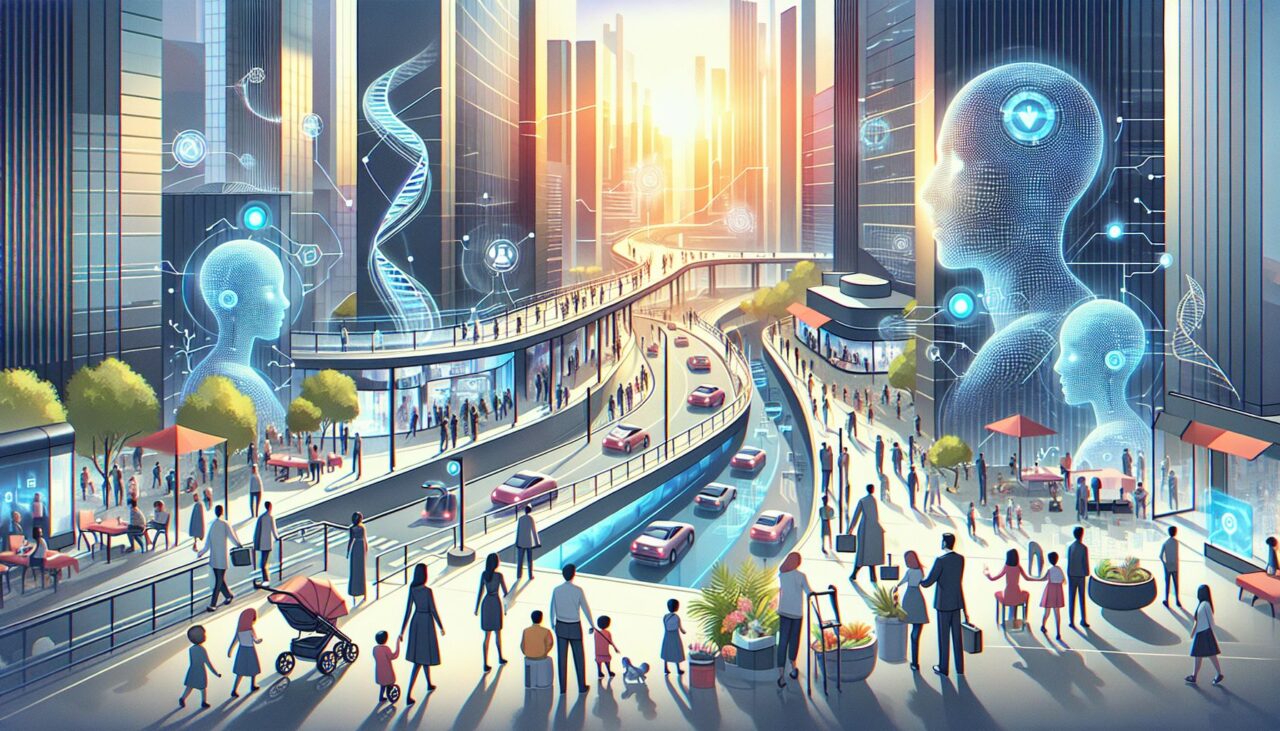
Hey tech aficionados! If you’ve ever found yourself lost in the tantalizing possibilities of a future sculpted by artificial intelligence, you’re in the right place. Our world is rapidly marching towards an AI-driven era, and as optimists who believe in the wonders of a techno-utopia, it’s time we explore how AI is changing industries and our everyday lives. Buckle in as we journey through the world of artificial intelligence breakthroughs that are as promising as they are inspiring.
The AI Renaissance: More Than Just Algorithms
Before we dive deeper, let’s get one thing straight: AI isn’t just a buzzword. It’s a revolution. We are witnessing an AI renaissance, where machine learning and deep neural networks aren’t just theoretical constructs but practical tools that are reshaping industries, economies, and personal lives.
AI Ubiquity: From Dim Screens to Dynamic Realities
AI is reaching into every corner of our existence. Don’t be surprised when you find algorithms predicting your next favorite song, virtual assistants scheduling your meetings, or AI-curated content filling your feeds. The relationship between humans and AI is already writing the next chapter of our digital story. And here’s the kicker: this is only the beginning!
Breakthroughs and Real-World Impacts
Healthcare: The Proactive Patient Care
The healthcare industry is one of the most heavily impacted sectors. Imagine a future where diseases are diagnosed with uncanny precision and treatment plans are tailored to each patient’s genetic profile. AI is turbocharging this vision into reality with technologies like IBM Watson Health and Google’s DeepMind, which are transforming diagnostics and patient care with impressive efficiency.
AI-driven predictive analytics can now predict patient outcomes and prevent readmissions. Through natural language processing, AI sifts through countless medical records to extract meaningful patterns and insights that inform public health strategies. It’s not just about treatment anymore. It’s about complete transformation.
Education: Personalized Learning Journeys
Perhaps the most impactful but underrated AI application is in education. Picture a classroom where every student receives personalized tutoring and curriculum tailored to their learning pace and style. AI is changing our outdated education system by using adaptive learning platforms like Coursera and Khan Academy, which offer highly personalized learning experiences.
Through natural language processing and AI-driven data analytics, educators can identify patterns and adapt teaching strategies in real time, ensuring no student is left behind. The democratization of education through AI-driven platforms is an inspiring step towards a future where everyone has access to quality learning experiences.
Transportation: Full Throttle Towards Autonomy
Whoosh! Are you ready to zip through cities at lightning speed while reading your favorite book? AI leads the charge in the autonomous driving revolution. Tesla, Waymo, and other giants are combining AI with advanced sensors to create self-driving cars that promise safer and more efficient road travel.
Autonomous vehicles could greatly reduce traffic congestion, lower emissions, and transform urban areas. Enhanced with machine learning algorithms, these vehicles are learning to navigate complex environments with remarkable accuracy. It’s not just about getting you from point A to B. It’s about reimagining how we connect with our cities.
The Nuances: Bridging Hope and Concerns
Ethical Boundaries: Ensuring AI Responsibility
It’s not all sunshine and rainbows. With great power comes the potential for misuse. As AI systems grow in capability, ensuring ethical deployment becomes essential. Think about concerns around data privacy, bias in algorithms, and the broader implications of AI decision-making processes. As we integrate these systems into our daily lives, a robust ethical framework is necessary.
Developers and policymakers are working together to create transparency and fairness in AI operations. Initiatives like OpenAI’s Charter are paving the path to developing safe and broadly beneficial AI systems. It’s a global challenge that requires global solutions, one where optimism and caution walk hand in hand.
Job Market: Complementing Human Creativity
The fear of AI taking over jobs is widespread, and while it holds water, there’s another side to this discussion. AI isn’t here just to replace. It’s here to complement. Automation can handle mundane and repetitive tasks, freeing us to focus on creative and strategic work.
By embracing AI, we are setting the stage for a new workforce model where humans and machines collaborate. Reskilling and upskilling efforts become important as workers transition from traditional roles to those enhanced by AI. New jobs will emerge as industries evolve, echoing the dynamic adaptability of human ingenuity.
Conclusion: The Horizon of Possibilities
So, here we are at the brink of an exciting transformation. The AI revolution combines optimism with careful development, poised to guide us to a more intelligent, equitable future. From enhancing healthcare to personalizing education and redefining transportation, the benefits of artificial intelligence are unfolding in real-time.
However, the journey won’t be without its hurdles. Navigating ethical waters, bridging the digital divide, and ensuring responsible usage are challenges that we must confront head-on. By maintaining a vigilant eye on the societal impacts and ethical considerations, while championing transparency and education, we can steer AI towards being an ally rather than an adversary.
In an age defined by promising technological advances, let’s embrace AI-driven innovation. Together, we can build a future where wonders unfold with each new technological dawn. Because at the end of the day, isn’t dreaming of a better tomorrow what a techno-utopian vision is all about?