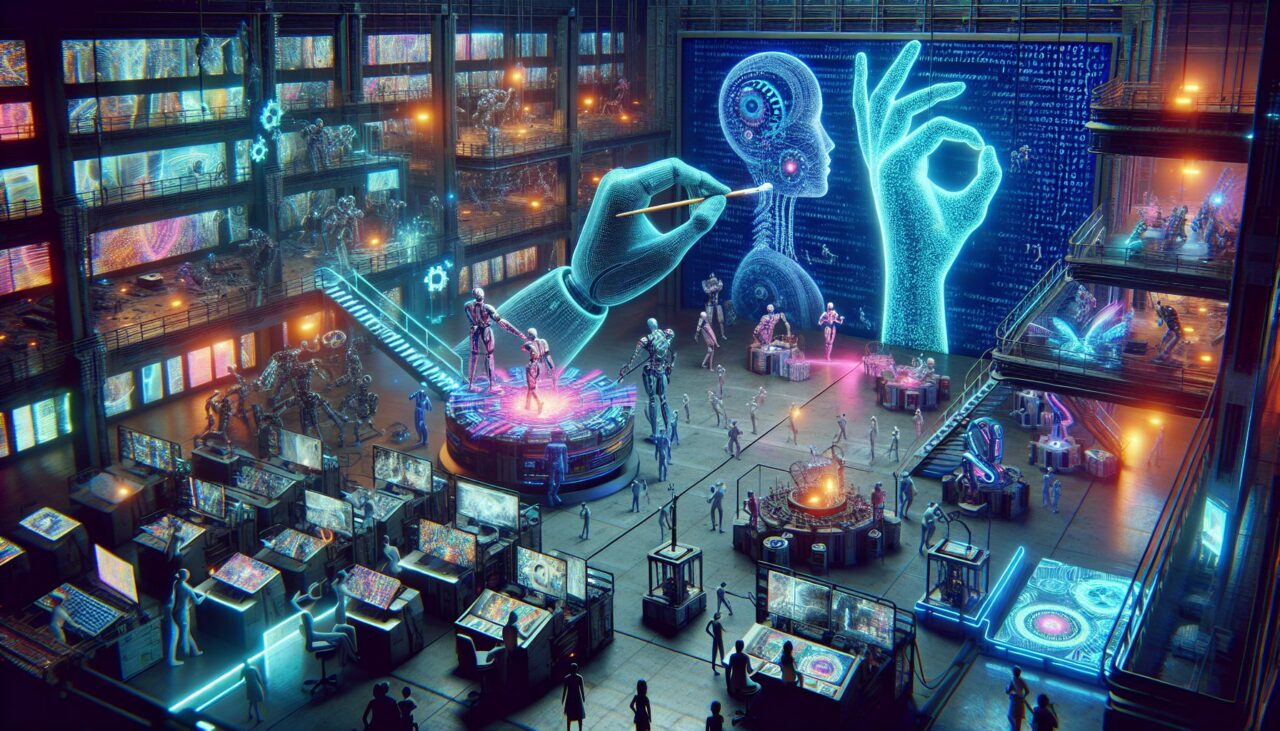
Hello, tech nerds, artists, and everyone in between! Have you ever wondered what would happen if Picasso had access to a neural network, or if Beethoven’s masterpieces were tweaked by an AI assistant during his downtime? Well, hold onto those VR headsets, because we’re diving deep into artificial intelligence in creative arts. And honestly? It’s pretty wild.
The Artists of Silicon Valley
Alright, folks, get comfy, grab that cup of coffee you’re pretending isn’t your fourth of the day, and let’s talk about how artificial intelligence is changing the boundaries of creativity. Just a few years ago, the idea of machines creating art was something reserved for sci-fi enthusiasts or the wild dreams of techies hanging out at obscure barista-sponsored hackathons. But today, it’s real, it’s happening, and honestly? It kind of blows my mind.
From algorithms painting abstract masterpieces to AI composing symphonies that would make Mozart pause in admiration, the creative muses have a new ally, or perhaps a new competitor. Whether it’s Google’s DeepDream bringing new life to surrealism or OpenAI’s GPT-3 writing poetry that’d make ol’ Shakespeare give a standing ovation, AI is stepping onto the stage with a big, bold flourish.
When Algorithms Pick Up the Brush
Let’s zoom in on the visual arts, shall we? AI has taken a fancy to playing with colors, shapes, and textures like a toddler with a newly discovered box of crayons. Tools like DeepArt and Runway ML have enabled artists—both amateur and professional—to blend technology and talent, creating pieces that look amazing but also challenge what we think art should be.
Just imagine showing up at an art gallery and seeing a piece you absolutely adore. You ask the curator, “Who’s the genius behind this marvel?” And the response is, “Oh, that’s a collaboration between an artist and an AI.” Mind blown, right? You betcha. This is what’s happening now, and I’m all for it.
AI: Composers of the Future
Let’s run, or should I say play, into the world of music. One of the most striking examples here is the performance of an AI-composed symphony by the London Symphony Orchestra, a spectacle that left the audience somewhere between awe and disbelief.
Music creation tools such as AIVA and Jukedeck (now part of TikTok) are behind some of these compositions, generating music that can work as background scores for movies or even inspire artists—human artists, that is—across the globe. It’s moving us into a realm where AI isn’t just creating music for us, but collaborating with us. And who knows? Perhaps the next big musical hit could be the result of teamwork between us, the humans, and our silicon-based co-workers.
The Creative Code: Poetry and Prose
Yes, dear reader, AI is also wearing the writer’s cap. Language models like GPT-3 are writing snippets of prose and poetry that seem nearly identical to those created by creative writing majors. It’s a dance of words created not just from data, but from interpretation and complexity—and it’s a conversation starter like no other.
Of course, our silicon friends are still learning. They sometimes have a love of the quirky repetition I liken to toddlers’ books—admittedly delightful, if you’re in the right mood for it. But make no mistake: they’re catching up rapidly.
Tech Meets Human Touch: The Future of Creativity
So, what does all this mean for the future? Are we looking at a world dominated by AI artists and musicians, with humans relegated to nostalgic activities like karaoke and art classes at the local community center? I don’t think so, and here’s why.
AI is a tool, a complement to human creativity, one that amplifies our capacities rather than replacing them. From assisting with initial drafts to providing inspiration when you’re stuck staring at a blank canvas, machines are enhancing, not supplanting, our artistic expressions. The potential here is vast and largely untapped.
Challenges Along the Drawing Board
But let’s not pretend there aren’t challenges. One concern is attribution. Who gets credit when an AI-assisted creation becomes the next Mona Lisa or “Bohemian Rhapsody”? The lines are fuzzy, and the paint’s still drying on those rules. Then there’s the question of authenticity—a word that makes art purists break out in hives. Can something created by AI hold the same deep, immeasurable value as its human-made counterpart?
These are questions we’re still wrestling with, potentially leading to the development of new artistic categories altogether.
Wrapping it Up: Our Creative Future
To sum it up, we’re on the edge of something pretty remarkable where the combination of human creativity and AI can lead to an artistic renaissance. It’s a future with boundless possibilities, one where the capabilities of art, music, and literature aren’t limited by human capacity alone.
So, here’s my advice: Start the conversation, challenge the norms, and perhaps collaborate with a piece of code. Who knows? You might just create something beautiful. Or at the very least, something worthy of a few raised eyebrows and a hearty laugh.
Stay curious, my fellow creators. The future’s looking pretty interesting, and just a little bit pixelated.