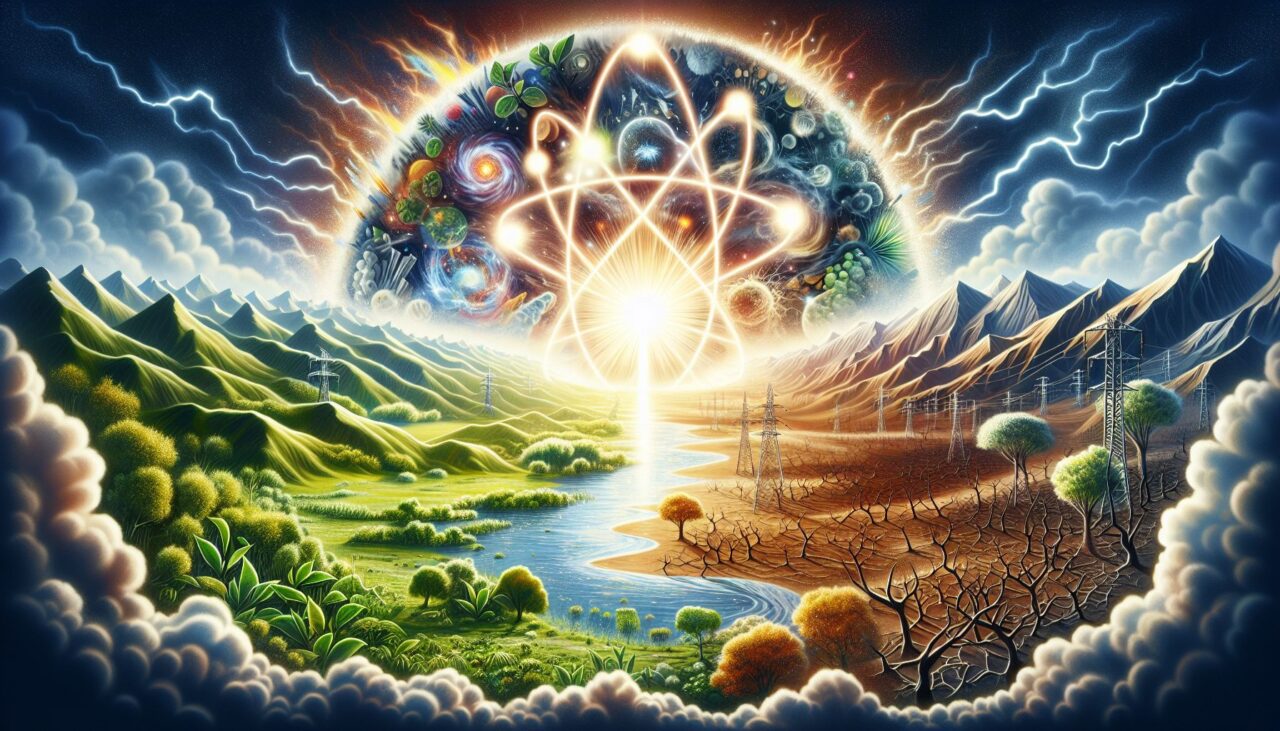
Hey there, fellow tech enthusiasts!
Today, we’re diving into the world of nuclear fusion—yeah, that glorious, almost sci-fi-like promise of unlimited clean energy that’s been “30 years away” for the past 60 years. But don’t scoff just yet, because something real is happening here. Grab your favorite mug of coffee (or tea, no judgment), and let’s geek out over what’s actually going on with nuclear fusion!
What’s Fusion Anyway?
Okay, first things first—just what exactly is nuclear fusion? No shame in asking. Simply put, fusion is the process of combining two light atomic nuclei to form a heavier nucleus, releasing energy in the process. It’s the same process that powers our sun and all those shiny stars twinkling at us each night.
The big ticket here is, unlike nuclear fission (what we currently use in nuclear power plants), fusion doesn’t produce the same long-lived radioactive waste and is way safer because it doesn’t have the chain reaction tendencies of fission. Plus, the fuel for fusion—mainly isotopes of hydrogen like deuterium and tritium—can be sourced from seawater and lithium, making it almost inexhaustible. Pretty rad, right?
The Breakthrough Moments
Here’s where it gets exciting: within the last couple of years, we’ve hit some major milestones. Let’s break down some of the juiciest highlights!
Ignition Achieved!
Late last year, scientists at the Lawrence Livermore National Laboratory in the U.S. managed something huge—fusion ignition. For the uninitiated, ignition is the point where the energy output from the fusion process exceeds the energy input that triggered it. In layman’s terms, more bang for your buck! This is real progress. It’s like reaching base camp on our climb up Mount Everest of clean energy.
ITER and the International Effort
Fusion isn’t just about one laboratory’s triumph; it’s a global collaboration. Check out ITER (International Thermonuclear Experimental Reactor), one of the world’s most ambitious energy projects unfolding in the south of France. Countries across the globe are pouring collective brainpower and resources into this project. The aim? To show fusion power is viable on an industrial scale.
ITER’s construction is a massive feat of engineering, kinda like assembling a star on Earth. Once operational, it aims to produce 500 MW of power with only 50 MW input. That’s ten times more energy output—which would be a genuine leap forward in energy generation.
The Challenges (Or As I Call Them, “Opportunities”)
Now, I won’t pretend it’s all smooth sailing. Fusion is tough—really tough. Let’s unpack some of the challenges, which we tech folks optimistically call “opportunities.”
Materials Under Pressure
One pressing issue is creating materials that can withstand the intense conditions inside a fusion reactor. I mean, imagine the core heat of the sun being recreated in your backyard! We need materials that can handle neutron bombardment and extreme temperatures for years without falling apart. Right now, scientists are working on materials that won’t degrade over decades of use.
The Costly Path
Then there’s the cold, hard cash. Fusion research is notoriously expensive (we’re talking billions). But when you weigh this against the potential of virtually limitless clean energy, it’s an investment many argue we can’t afford not to make.
Taming the Plasma Beast
Controlling plasma—the hot, charged state of matter where fusion happens—is another tech puzzle we’re solving. Donuts, or more specifically, toroidal magnetic fields (think giant bagels), are used in tokamak reactors to contain this plasma. Keeping it stable is tough. The good news is that recent advances in magnetic confinement and plasma control are actually making this dream feel more real.
What This Could Actually Mean
Now, let’s think about what’s possible with fusion in our lives.
A World of Different Energy
Imagine a world powered by energy that’s clean, abundant, and cheap. Cities built around sustainability. Electric vehicles with endless range. Power grids that actually help fight climate change instead of causing it. Fusion could be the backbone supporting all kinds of environmental innovation.
Economic and Social Benefits
The economic implications are pretty wild too. Fusion could create a boom in tech jobs, funding R&D across related sectors. Socially, it could level the energy playing field. Developing regions globally could harness fusion, skipping the carbon-heavy energy mistakes made by much of the developed world.
Where We Actually Stand
We’re in a weird and exciting moment in the history of energy—a real chance to change how we power our civilizations. Fusion is complex and challenging, requiring brilliant minds and serious persistence, but honestly? The progress feels different this time. More concrete.
I’m genuinely optimistic about the scientists, engineers, and visionaries who are working with the stuff of stars. Maybe in our lifetime, we’ll see “star-in-a-jar” power lighting up our cities, changing how we live, work, and play. That’s worth getting excited about.
So until next time, keep dreaming big and geeking out over what the future holds!