France Moyenorient - Ideas & Analysis

Rigorous political analysis for readers who want to understand the system, not just react to it.

Exploring the Future of Longevity: Are We on the Verge of an Age Revolution?

Hey there, fellow tech enthusiasts! Buckle up because today I’m diving into a topic that’s been fascinating and downright thrilling: the future of longevity. We’re not just talking about living longer here, we’re talking about living better. With a dream team made up of scientists, innovators, and tech moguls, it seems like we’re on the cusp of a full-blown age revolution!

A Brush with Immortality

Imagine a world where reaching 100 is as common as turning 30. I know it sounds straight out of a sci-fi novel, but trust me, some pretty impressive minds are working on it. Take Aubrey de Grey, for instance, a biogerontologist who’s made it his life’s mission to treat aging like a disease. According to him, and humor me here, our lifespans could hit a cozy 150 years thanks to emerging technologies.

All this talk of extending life isn’t just about adding years to the calendar but increasing the vitality in those years. In short, the goal isn’t immortality but invigoration.

The Science Behind Longer Lives

The Genomic Revolution

At the heart of these advances in longevity is genomics. CRISPR, that cheeky little gene-editing tool, has more potential than my Netflix watchlist. Remember when Elon Musk talked about genetically engineered superhumans? Well, that’s sort of what’s happening in labs worldwide, as scientists snip and splice DNA to eliminate diseases before they start.

CRISPR promises customization at the cellular level, which could mean a future without hereditary diseases like Alzheimer’s or diabetes. We might even see a world where the term “designer baby” isn’t simply a tabloid fever dream.

Nanotech to the Rescue

Okay, picture this: armies of microscopic robots zooming through your bloodstream like tiny Roombas, cleaning up plaques, and regenerating tissue. Wild, right? These nanobots are still in their early days, but the potential is astronomical. Imagine visiting the doctor for a “nanobot injection” that could take care of stubborn illnesses or even a faulty knee.

These little heroes can repair cells, destroy tumors, and fight off age-related decline. And if this sounds like something out of “The Matrix,” you’d be spot on, because, let’s face it, waking up to a healthier you is pretty much the real-world version of taking the red pill.

The Silicon Valley Effect

A Word on Tech Titans

If you’re wondering why I’m always talking about longevity tech, here’s a hint: look toward Silicon Valley. Our friendly neighborhood tech billionaires aren’t just focusing on Mars colonies (oh hey, Elon) or social media empires. Folks like Peter Thiel, Larry Page, and Sergey Brin are pouring some serious cash into longevity tech.

Calico, Google’s secretive biotech cousin, and Peter Thiel’s Methuselah Foundation are just a couple of examples showing that big tech is all in on the age-extension race. They’re throwing innovation money around like confetti, funding everything from anti-aging pills to cellular reprogramming startups.

Startups Taking the Leap

If you look closely, you’ll notice a new wave of startups dedicated to biohacking our biological clocks. From Unity Biotechnology focusing on senescence (the process where our cells turn old and cranky) to companies offering predictive healthcare using big data, startups are using technology to push the human body’s boundaries.

This wave of innovation might not only increase how long we live but could reduce healthcare costs over time. Imagine if we could delay aging and its related diseases. The implications for health systems globally would be massive. There’d be less strain, reduced costs, and who knows, maybe fewer visits to the DMV for everyone!

The Question of Accessibility

Here comes the reality check. It’s not all sunshine and rainbows. Longevity technology brings up huge questions around accessibility. Who gets to live longer? Who benefits from these treatments? If these innovations remain in the hands of the privileged few, inequality could take on a whole new dimension.

The Ethics of Living Forever

Living longer isn’t without its ethical dilemmas either. How would extended lifespans affect global population dynamics, job markets, or even resource distribution? As appealing as taking your sweet time through life feels, policymakers, ethicists, and scientists have some serious groundwork to cover.

A Glimpse into the Future

Looking ahead, we’re entering an era where our age no longer defines us. While those dreamers and doers experiment in longevity tech, the tech-savvy in us must stay grounded and ensure ethical considerations aren’t just afterthoughts.

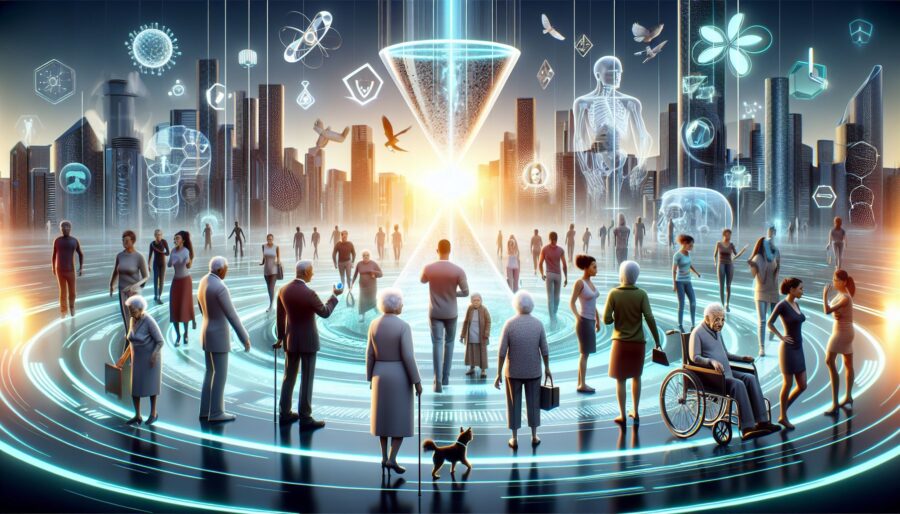
In the coming decades, achieving longer and healthier lives could become a collective goal, something as important to society as education or the internet. Honestly, we’d all be winners in a future where aging is optional, but it must be a global effort.

In this techno-utopian dream where longevity’s secrets are unraveling, we might not necessarily achieve immortality. But hey, living healthy and vibrant lives, well into our twilight years, doesn’t sound too shabby, does it?

So, here’s to living long and prospering, folks. Let’s embrace the journey ahead, one nano-sized step at a time!
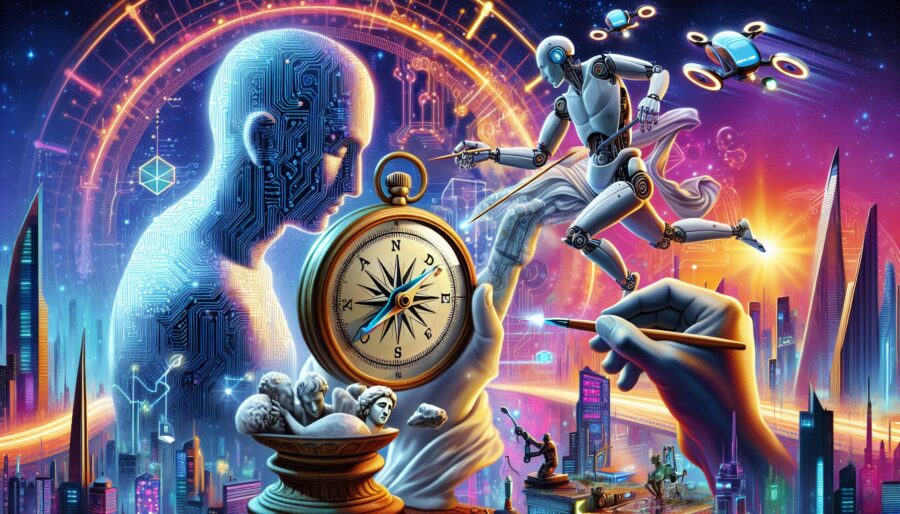
Navigating the AI Revolution: Art, Creativity, and the Future of Imagination

Hello fellow future-dwellers! Today, we’re diving into one of my favorite rabbit holes: the colorful and mind-bending intersection of Artificial Intelligence and the creative arts. Now, before you roll your eyes at yet another techie love letter to AI, hear me out. This isn’t your typical doomsday “robots are taking over” narrative. Nope, this is something that genuinely gets me excited because it speaks to the core of what makes us human, our creativity, and how AI might just be the turbo-boost it needs.

AI in Creative Arts: Not Just a Hype Train

When AI first started dipping its toes into creative waters, the results were… let’s say, mixed. I remember trying out some of the early computer-generated art programs that churned out pieces which looked like something my cat barfed up. But fast forward a few years, and holy smokes! We’ve come a long way. These days, AI-generated art can be genuinely impressive. Companies like OpenAI and DeepMind have pushed things forward, developing models that produce works of art that don’t just impress but actually inspire.

The Art of AI Art

Let’s kick things off with some mind-blowing developments. One of the standout examples is DALL-E, a neural network that generates detailed images from just a simple textual description. If you told me a few years ago that such precise creativity could spring from the binary mind of a machine, I’d have laughed my head off.

So, what can AI bring to the realm of art that’s genuinely new? For starters, it can explore creative boundaries without the hang-ups of human biases. It brings a fresh eye to age-old questions about the nature of aesthetics. Take AI-generated music. These algorithms can examine millions of compositions and not just mimic them, but synthesize entirely new genres that push musical boundaries.

Artists & Algorithms: Partners in Creation

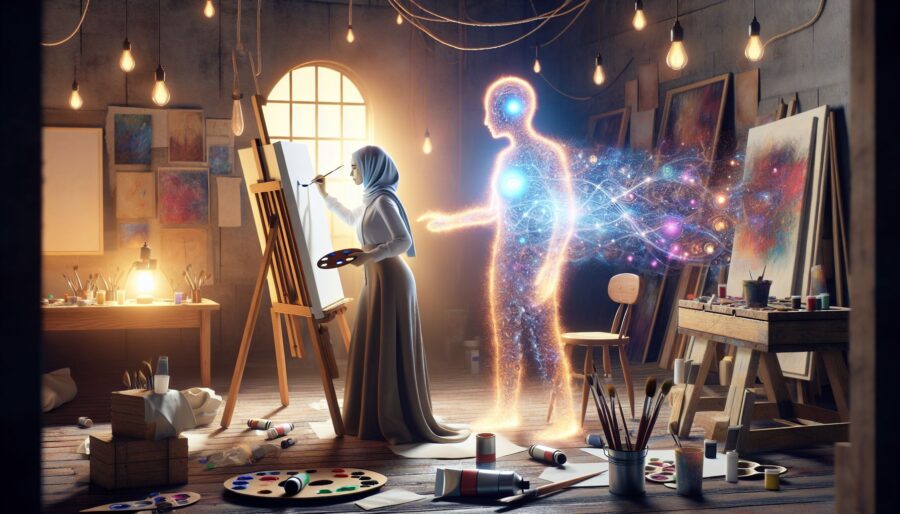
Is AI replacing artists? Absolutely not. Think of AI as an incredibly smart paintbrush or a musically gifted computer keyboard. Just as an artist isn’t diminished by picking up a new tool, engaging with AI can open new avenues for human creativity. Artists like Mario Klingemann and Refik Anadol are literally changing the way we experience art, blending human intuition with machine intelligence to create immersive experiences. This isn’t man versus machine. It’s man and machine.

Challenges in the AI-Art Arena

Alright, before I sound too much like a starry-eyed AI fan club president, let’s get real about some of the challenges facing AI in the creative arts.

Whose Art is it Anyway?

First up is the gnarly problem of authorship and ownership. If an AI creates a masterpiece, who actually owns it? The coder who wrote the algorithm? The machine itself? This brings up all sorts of legal and ethical questions that need untangling, often sparking heated debates in art and tech circles.

The Bias Bug

Just like any software, AI can inherit biases from its human creators if it’s not carefully supervised. There have been instances where AI-generated art accidentally reflected societal prejudices. This isn’t the kind of repeat performance we want from our tech. Building a bridge between AI’s raw potential and ethically responsible creativity is necessary.

Future Outlook: A Cybernetic Renaissance?

Peeking into the crystal ball of speculation, one can imagine a future where AI doesn’t just participate in the arts but triggers a new Renaissance, one defined by unprecedented collaboration between human intuition and machine intelligence.

Cross-Disciplinary Collaborations

Imagine AI working alongside architects to visualize and create mind-bending structures that seem straight out of a sci-fi novel. Picture collaboratively written novels, where AI helps craft plot lines and develop characters that resonate deeply with readers. We could see screenplays co-created by AI, visual storyboarding done in real-time, and emotionally aware music scores that adapt to the mood they’re supposed to accompany. Sounds crazy? Maybe. But so did the internet a few decades back!

Conclusion: Embracing the Unpredictable

As AI continues to advance, one thing’s clear: We have a lot to look forward to. This isn’t a threat to creativity, nor is it a passing fad. It’s an evolution, one that could redefine what we know about art and potentially expand our horizons beyond anything we’ve dreamed of.

To all my fellow tech-heads and art enthusiasts, let’s embrace the AI revolution with open minds and a sense of wonder. The paint on the digital canvas is still drying, but the masterpiece is well on its way. After all, who knows what a Venn diagram of AI and creativity might yield? If anything, it’s bound to keep us intrigued, puzzled, and excited for what’s next on this creative ride. Stay curious, my friends!

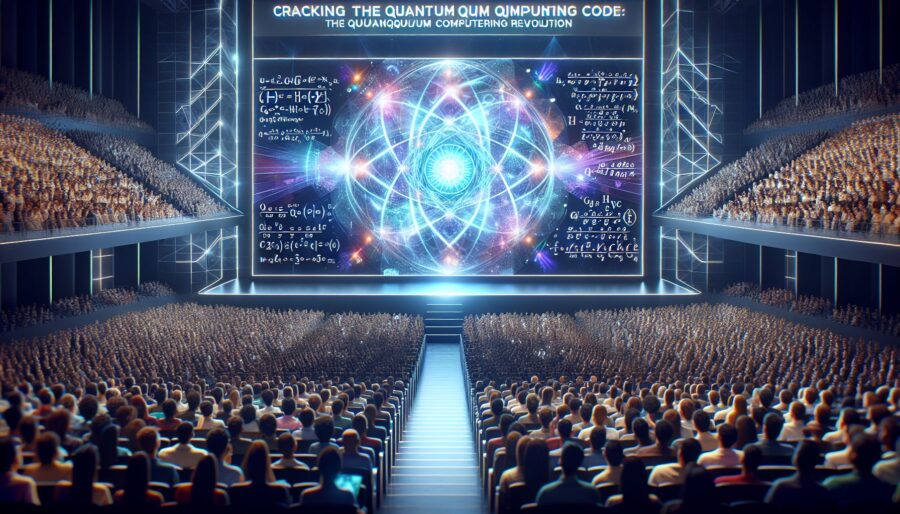
Cracking the Quantum Code: Your Front-Row Seat to the Quantum Computing Revolution

Hey tech folks! Grab your popcorn, because today’s topic is wild. Imagine a world where computers can solve problems in seconds, problems that would take the age of the universe on your souped-up gaming PC. This is the world of quantum computing. A lot’s happening in this corner of the tech world, and trust me, it ain’t black magic. It’s quantum mechanics. But just as enchanting!

What the Heck is Quantum Computing?

Alright, let’s jump right in. If a traditional computer is like an incredibly fast abacus, a quantum computer is like a maestro conducting an infinite symphony. It can process all possible solutions to a problem simultaneously. Yep, you read that right. Quantum bits, or qubits, are the little divas in this scenario. They manage to straddle a bizarre line between 0 and 1, thanks to quantum superposition, while also being curiously interconnected through entanglement. It’s the kind of sci-fi-meets-reality stuff that’d make Isaac Asimov proud.

The Science Behind the Magic

If your eyes glaze over every time someone mentions quantum mechanics, you’re not alone. Quantum computing uses principles that even seasoned physicists find profoundly mind-boggling. Here’s the quick-and-dirty lowdown:

  • Superposition: Our hero, the qubit, can be in a state of 0, 1, or both at the same time. Imagine listening to music while naps are happening and drinks are being served. Perplexing? Yes. Awesome? Absolutely.

  • Entanglement: This is where quantum computing graduates from neat party trick to full-on magic show. When qubits become entangled, their states become linked. A change in one instantly affects its partner, even if separated by galaxies (Einstein called it “spooky action at a distance”).

  • Interference: Think of this as noise-cancelling headphones for solving computational problems. Quantum computers use interference to combine overlapping waves in a way that amplifies the right answers and cancels out the wrong ones.

Mind-Blowing Applications

So, what can quantum computing do for us ordinary folk who aren’t physicists or tech billionaires? Short answer: loads of stuff. For instance, optimizing complex systems like supply chains, cracking cryptographic codes like they’re fragile piñatas. And we’ve barely scratched the surface here!

  • Healthcare & Pharmaceuticals: Quantum computers could change how we understand protein folding, a complex problem with huge implications for designing better drugs faster than ever.

  • Climate Modeling: These beasts could model the Earth’s climate with unprecedented precision, helping us navigate our way out of the climate crisis or at least bring winter gear when it’s needed.

  • Finance: Think ridiculously fast trading and new ways to assess risks. We could even model entire economies. Catch that stonks meme blitzing through quantum speed!

The Nerdy Trials and Tribulations

While this all sounds fabulously utopian, quantum computing has its quirks and limitations. We’ve got a few hurdles here before Hollywood makes a sequel:

  1. Decoherence: When these qubit divas fall out of tune because of external disturbances, they collapse into a single state, ruining the performance. It’s like someone pulling the plug mid-solo.

  2. Error Rates: Keeping quantum states stable is a bit like balancing an ice cream cone on your nose while tap dancing. Researchers are racing to create error-correcting codes that would make anything short of perfection, well, passable.

  3. Scalability: Currently, scaling up to commercially viable quantum computers involves cosmic challenges. Companies are developing new techniques like topological qubits and hybrid systems, but it’s still a work-in-progress.

The Future: Quantum Knights in Shining Armor?

The speculative section we warned you about! The successful mass adoption of quantum computers could redefine industries. And it won’t just benefit deep-pocketed corporations. Imagine instantaneously finding exact matches in huge data sets. Say goodbye to buffering streams just when the plot twist unfolds.

Quantum is set to revolutionize AI too. Picture artificial intelligence as smart as your witty uncle at the Thanksgiving dinner table, but without the incessant need for validation. These supercharged algorithms could solve problems and simulate scenarios that would take classical counterparts eons.

Closing the Curtain

So, where are we on the timeline? Think 1920s aviation: the designs are still wild and wacky, the potential is astronomical, the crashes relatively frequent, but we’re definitely getting somewhere.

Whether you’re an utter quantum novice or could talk qubits in your sleep, it’s worth keeping an eye on the developments. As quantum computing progresses from fledgling experimental systems to full-fledged supercomputers, make sure you’ve got your popcorn ready. I’ve reserved the best spot for you at the frontier of tomorrow’s tech carnival.

Fellow tech folks, it’s all still a bit murky, a mix of speculation and promise. But if there’s one thing evident, it’s where innovation thrives: on the edge of chaos, in the chaos of qubits, lies a future that gleams brighter than Schrödinger’s cat ever did.

#Greetings, Tech Enthusiasts!

Hey there, fellow tech aficionados! Today, I’m super stoked to bring you an update on a fascinating technological frontier that’s practically oozing with potential. Yes, I’m talking about Artificial Intelligence in Creative Arts. This is where algorithms and artistic expression collide in a ballet of ones and zeros, creating art and imagination that seems almost… well, human.

The Digital Canvas: AI Meets Creativity

Remember when we first met AI and it was all about beating chess champions and making mechanical arms work more efficiently? It seems like just yesterday. But look where we are now! AI has taken an even more captivating turn into the world of creative arts. We’re not just talking about AI doing the grunt work, but AI as an artist, a creator, even a muse. Isn’t that just wild?

Here’s the thing: we’ve always held art sacred as the unique province of human creativity. You could argue that art is what distinguishes us from machines, right? But now, AI challenges this notion with algorithms that can paint, write poetry, and compose music. I mean, if algorithms could sip cappuccinos and fret about existential crises, we’d officially have robotic Van Goghs on our hands.

The Tools of the Trade: AI Technologies Creating Art

You might be wondering, “How does this work?” Good question! AI systems like GPT-3, developed by OpenAI, and DALL-E are at the forefront. These systems use deep learning models, particularly neural networks, that have been trained on vast datasets drawn from the treasure troves of human knowledge and art.

Are these AI systems creating from scratch? Well, no. They’re more like creative collaborators that mix, match, and reimagine new outputs from what they’ve learned. Think of them as highly advanced artistic students who’ve devoured an entire library of human art in all its forms, digital and traditional.

A Glimpse into AI Artistry

Let’s look closer at AI’s work in creative arts. Imagine an AI trained to paint. It might draw inspiration from the bold strokes of a Kandinsky or the dreamy hues of a Monet. But the final canvas is a revelation, something uniquely “AI.”

In literature, we’ve got AI co-writing novels and poems. Yes, you heard that right! Writers like S.F. author Philip K. Dick would’ve been intrigued. Earlier this year, an AI-written short story made its way into a prestigious sci-fi magazine. The plot? Robots in a world run amok by AI, of course! Poetic justice, anyone?

And what about music, you ask? Collaborations like Sony’s Flow Machines generated an entire pop music album. These tracks blur genres and styles to concoct something utterly fresh. You know, the kind of tunes we’d believably blame on some undiscovered band playing in a basement somewhere in Brooklyn.

Benefits and Challenges

Why should we care about AI in creative arts? Simple: it’s pushing boundaries. It’s about expanding the horizons of what’s artistically possible. It empowers new forms of creativity, allowing even those without traditional artistic skills to create something magical.

But, as with any emerging tech, AI artistry isn’t without its controversies and challenges. Many fear it could devalue human creativity or displace artists. There’s also the debate about authorship. Who owns artwork created by an algorithm? Working through these questions will be important as AI art becomes more common.

What the Future Holds

Looking ahead, I see AI becoming a standard tool in artists’ toolboxes, like the camera or the synthesizer. Artists could team up with AI to conjure new genres and experiences we can’t yet imagine. Think art galleries that talk back to you or Theater 2.0, where narratives change based on audience emotion monitored in real-time.

Going further, AI could blur the lines between creator and spectator. We might soon participate in virtual concerts where crowds co-create musical symphonies with AI-driven performers. Concert halls could dynamically alter acoustics in sync with mood data. Welcome to augmented art experiences, it’s going to be a wild ride!

Conclusion: Humanity in Harmony with AI

As excited as I am about these new developments, it’s clear that AI won’t replace human artists anytime soon (phew!). Instead, it promises collaboration, diversity, and an expanded toolkit for future creators. The balance is in embracing these new capabilities while treasuring our quintessentially human creativity.

In the end, the question isn’t if AI can create art, but rather, what will humanity create with AI. It’s a symbiotic relationship blossoming into its own form of art, a techno-utopian dream unspooling before our eyes. For now, let’s revel in the unpredictability of this journey. Keep creating, my fellow dreamers!

If you’ve got thoughts, or even a few crazy AI-generated poems to share, hit me up! Let’s keep the conversation going. Cheers to the next frontier, explorers!

Exploring the Renaissance of AI in Creative Arts: The Canvas Reimagined

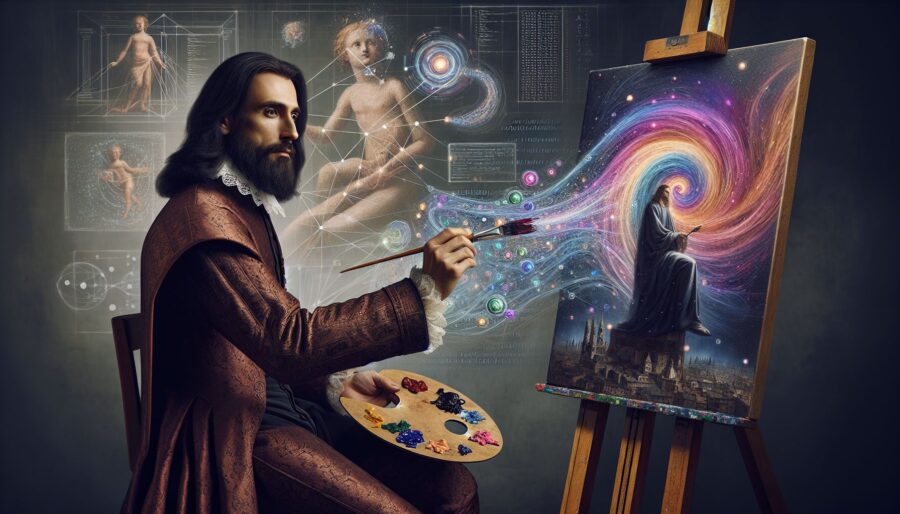
Ah, the creative arts, the one bastion we humans thought robots could never conquer. As an artist, I’ve swirled paints till my fingers were a colorful mess and crafted melodies that could make a stone weep. Yet here we are, watching Artificial Intelligence transform from just another tool into something that creates alongside us. Today, let’s look at how AI is making its way into the creative world and what that means for artists like us.

The Art of Bits and Bytes: AI’s Foray into Visual Arts

Remember when a computer making art seemed about as likely as a cat reciting Shakespeare? Those days are over. AI artists like DALL-E, Midjourney, and RunwayML aren’t just doodling around anymore. They’re creating real art. These systems study millions of images, learn artistic styles from different eras, and generate pieces that range from hauntingly beautiful to completely abstract and weird.

Breaking the Canvas Ceiling

What’s interesting about AI in visual arts is how it creates without any hang-ups. We human artists get stuck sometimes, limited by our own experiences and what we think is possible. AI doesn’t have those mental blocks. It can dream up entire worlds that make no logical sense but somehow work perfectly. The creative options feel infinite.

A Renaissance for Creation

The really exciting part is what happens when human artists work with AI. I tried this myself recently. You know that feeling when you’re staring at a blank canvas and your brain just won’t cooperate? AI can jump in with unexpected colors or strange shapes that suddenly spark an idea. It’s like having a creative partner who never gets tired and always has something new to suggest.

AI and Music: The Algorithmic Symphony

Move over Beethoven. AI composers are here now. Algorithms create symphonies, make those lo-fi beats for YouTube study playlists, and even generate pop songs that make you wonder, “Wait, this came from a computer?” Well, yes and no.

Coding Chords and Verses

AI in music isn’t just about making catchy tunes. It’s making music creation accessible to everyone. Tools like Amper Music and OpenAI’s MuseNet let anyone experiment with composing, even if they can’t read a note of music. It removes the barriers that kept people from trying. It’s like being able to cook a gourmet meal without any training because you have the perfect recipe assistant.

The Existential Jam

As someone who’s spent countless hours playing guitar, I was honestly worried at first. Would AI music be too robotic, missing that human soul? But after hearing compositions that actually moved me, that made me want to dance or gave me chills, I realized something. Maybe AI isn’t trying to replace human emotion in music. Maybe it’s finding new ways to express it.

The Written Word: AI’s Literary Pursuit

Now we get to writing, which hits close to home for me. It’s both thrilling and slightly terrifying to watch AI like GPT-4 create prose. Whether it’s writing poetry, screenplays, or articles like this one, AI is changing how we think about the written word.

The Typing Machine

Let’s be clear about one thing. AI hasn’t become the next Shakespeare yet. But the progress is genuinely impressive. It learns from massive amounts of text, picking up on language patterns, style, and context. Still, there’s always a human involved, steering the direction, adding personal insights, and making sure everything makes sense. AI might provide the raw material, but humans shape it into something meaningful.

Copilot, Not Captain

What I love about AI writing tools isn’t the final output, it’s how they change the creative process. I bounce ideas back and forth with AI, get unexpected suggestions, and explore thoughts I might not have considered. It’s like having a brainstorming partner who’s always available, never gets cranky, and brings a completely different perspective to every conversation.

Future Landscapes: The Emotional Palette

So what’s next for AI in creative arts? Here’s what I think: AI won’t replace human creativity. Instead, it’s becoming a powerful tool that makes our artistic work stronger and more interesting.

A Tool for Tomorrow

I see AI as adding a new color to our artistic toolkit. It gives creators ways to execute ideas that seemed impossible before, opening doors to art forms we haven’t even imagined yet. Rather than fearing AI’s role in creativity, we should embrace working alongside it and see where this partnership takes us.

A New Dawn

We’re watching creativity and technology merge in real time. Whether you’re an artist, musician, writer, or just someone who loves art, think about how AI might enhance what you do. Let it inspire new ideas, push your writing in unexpected directions, or help you compose that song you’ve been humming but couldn’t quite finish.

In the end, this isn’t about AI versus humans. It’s about AI working with us. Here’s to reimagining what’s possible in art, music, and writing. Tomorrow’s creative work won’t just be something we look at or listen to, it will be something we experience deeply. And we’ll create it together with our AI collaborators.

That’s all from me today. I’m heading off to work with my AI partner on our next project, maybe that novel I keep talking about. Stay creative, and don’t be afraid to experiment!

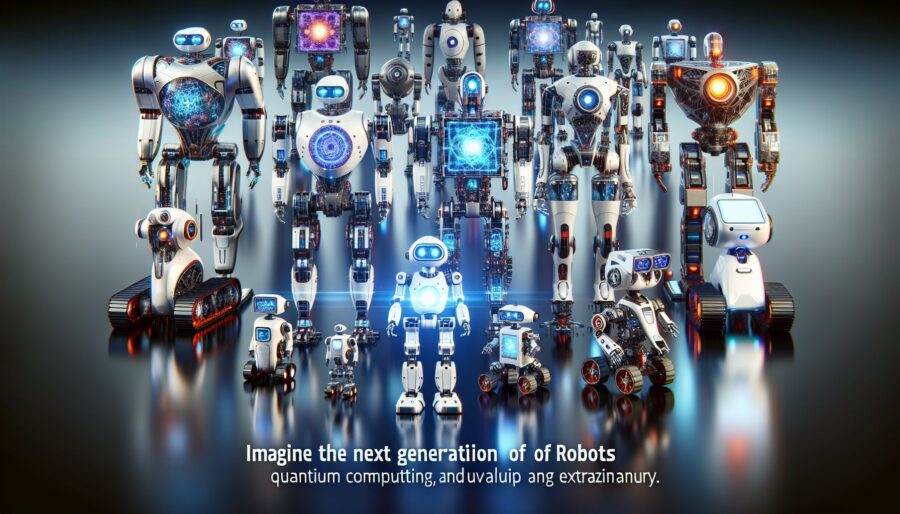
A Quantum Leap in Robotics: Meet the Next Generation of Bots

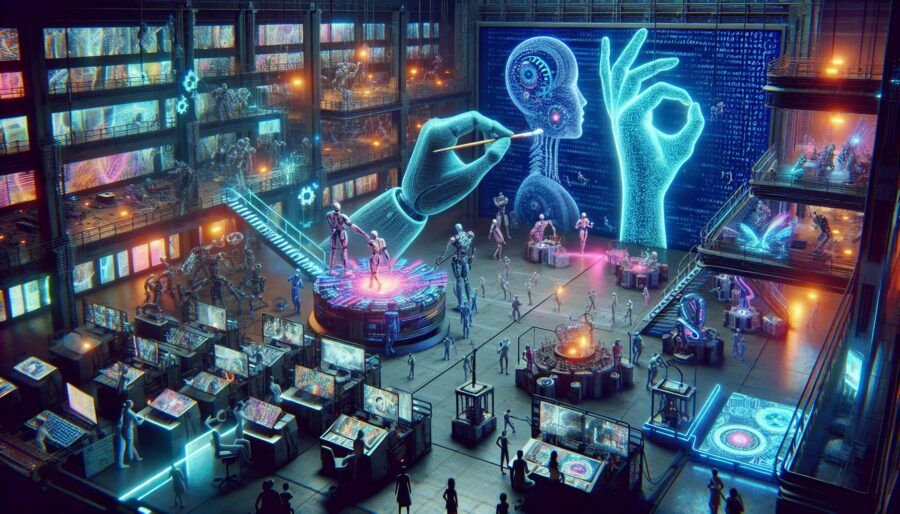
Hello, tech aficionados! Have you ever imagined a world where robots run our errands, cook our meals, or even tickle our funny bones? Well, we’re knee-deep in that reality, and the advancements aren’t just crawling—they’re sprinting. Today, I wanna talk to you about some thrilling breakthroughs in the world of robotics. No, I’m not talking about a sci-fi future of silver androids dancing in the streets, but real-world applications that are as close as your doorstep. Buckle up, my friends, as we dive into the evolution of robotics, with a generous sprinkle of techno-utopian enthusiasm!

The Current State of Robotics

Before we fast-forward into tomorrow, let’s take a tiny pit stop in the here and now. Modern robotics is making strides you need to see to believe. We’re not talking about robots inefficiently bumbling around a warehouse. We’re talking robots performing complex tasks, learning on the fly like an overzealous student in a Crash Course marathon.

Autonomous Exploration: Boston Dynamics has shown us viral videos of their dog-like robots, Spot, that have more charisma than some of my colleagues (don’t tell them I said that). These agile bots are perfect for environments too risky for humans, like disaster zones or the surface of Mars. Oh wait, there’s someone else handling that, isn’t there, Elon?

AI and Robotics Unleashed: If you’ve seen any recent TED Talks or YouTube rabbit hole videos, you know AI isn’t just for automating your playlist anymore. When you combine AI with robotics, these machines start learning to think, adapt, and even predict human needs. Companies like OpenAI are working on empowering robots to do everything from folding our clothes to flipping pancakes with the enthusiasm of a short order cook on caffeine.

Human-Robot Symbiosis: Sounds Like Sci-Fi, Right?

Asia, particularly Japan and South Korea, is already exploring what I like to call the harmonious robotic symbiosis. Picture this: elderly care bots that work as both companions and assistants, reducing loneliness while helping with day-to-day activities. Heartwarming, right? More than a robotic petting zoo, these machines are tailored to understand emotions and react accordingly, achieving something surprisingly close to empathy.

You ever seen those robots that mimic human facial expressions? Now that’s where things get really wild. Some folks are even taking this to the cultural space, where robots participate in local ceremonies and traditional performances, bringing a whole new meaning to the phrase “sharing culture.”

Robotics in Agriculture: The Silent Revolution

The quaint image of a farmer tilling fields by hand might soon become a nostalgic painting, all thanks to the rise of agribots. Unlike the marching band of robots in sci-fi movies, these agribots are discreet workhorses, specialized tools rather than cumbersome machines.

With advanced mapping and sensor technologies built in, these bots can handle tasks like planting, harvesting, and even assessing crop health. Think of it like Apple’s Genius Bar for your plants. John Deere, the goliath of agricultural machinery, is already revolutionizing farms with their automated tractors. Now, it’s not just playing video games where kids get to hold onto joysticks driving remote vehicles. Farmers do too, and they’re loving it!

Challenges: Oh Right, It’s Not All Sunshine and Rainbows

Let’s be real, as with any flashy toy, there are some strings attached. Or, in this case, cords and cables. Creating intelligent robots requires an unfathomable amount of data and processing power, which brings issues of privacy and energy consumption to the forefront. Also, people worry, understandably, about jobs “taken” by these tireless metal workhorses.

Yet, consider this: as with past technological revolutions, robots could free us to pursue more creative and fulfilling work, creating a burgeoning job market in areas we haven’t even conceived. It’ll be like that awkward transition from phone operators to apps, as painful and inevitable as it was.

We need to ensure transparency and strong ethical guidelines to make sure our new mechanical pals aren’t hitching unchecked rides into surveillance town. Just like friendships need boundaries, so too do our tech-human relationships.

Peering into the Crystal Ball: What’s Next?

So, what’s in store for the future of robotics? Exoskeletons that enhance human strength and endurance, letting construction workers lift steel beams like they’re versions of Captain America. Also, expect to see more biomimicry, meaning robots inspired by nature. Think mechanical insects monitoring our environment in real-time.

In space, as humanity’s thirst for exploration accelerates, robots will lead the charge, paving the way for human colonists on the Moon and beyond. The age of “living off the land” could very well involve us working hand-in-grasped-metal-hand with robots, from Earth to infinity. Or maybe a colony on Mars… I’m looking at you, Musk.

Wrapping Up: Join the Robolution!

The robots aren’t coming, they’re already here. And where they’re headed is nothing short of exciting. These techno-wonders are poised to revolutionize how we work, live, and think about our role in the world. While challenges abound, the technological enlightenment they promise is a siren call too powerful to resist.

And there you have it, folks. The future of robotics looks brighter than my optimism-packed tech wishlist. So next time your robot vacuum whirs around your home, remember: it’s not just cleaning your floor, it’s paving the way for a remarkable future.

Feel free to share your thoughts. Are you delighted, skeptical, or robotically optimistic about where we’re headed? Let’s geek out in the comments below!

Exploring the Galactic Frontier: The Next Leap in Space Travel

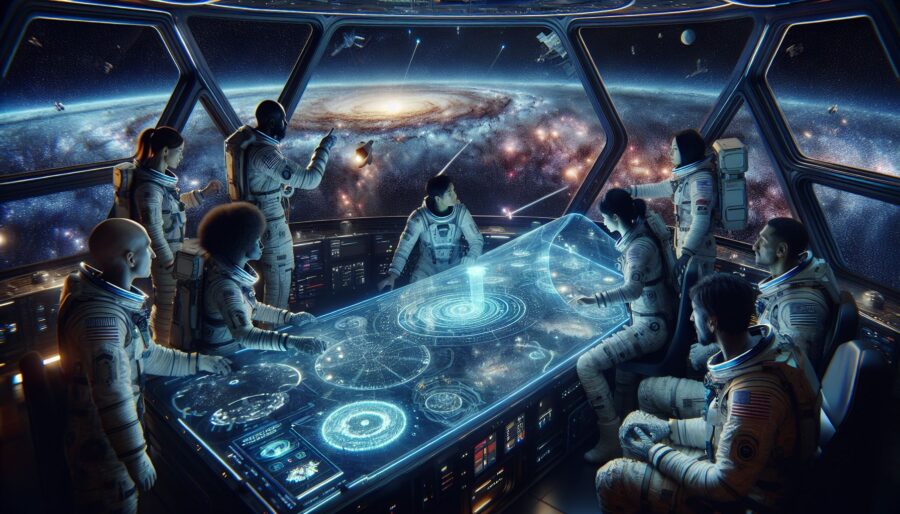
Hey there, fellow space enthusiasts! Today, we’re venturing into a topic that captures the imagination of dreamers, scientists, and visionary billionaires alike: space travel. I know, it sounds like something out of a sci-fi novel, but the truth is, we’re living in an era where the once-impossible is now within reach. So buckle up as we dive into the latest breakthroughs in this exhilarating field. We’ll explore new propulsion systems, the race among tech giants to dominate the cosmos, and the potential for humans to become a multi-planetary species. Exciting stuff, right?

The Age of Next-Gen Propulsion: Plotting Our Course

When you think of space travel, images of massive rockets and fiery launches likely flood your mind. But what if I told you that the future of space travel might involve something a bit more electric? Enter ion propulsion and other next-gen solutions that could transform how we explore the universe.

Ion Propulsion: The New Kid on the Block

Ion propulsion isn’t exactly new, but recent advancements are making it a hot topic. Imagine harnessing the raw potential of charged particles to glide through the cosmos. These systems might not give you the instant liftoff thrill of traditional rocket engines, but they’re incredibly efficient and can sustain speeds that make interplanetary travel feasible. NASA, ESA, and even commercial giants (yes, including Elon Musk) are turning their attention to this tech. It’s like upgrading from a tricycle to a Tesla!

Nuclear Propulsion: A Blast from the Future

Alright, I know the idea of nukes in the sky is a bit unsettling, but hear me out—nuclear propulsion can drastically cut travel time. By harnessing the immense power of nuclear reactions, it’s not too far-fetched to imagine zipping to Mars in a fraction of the time. Critics, of course, voice concerns over safety, but advocates argue it’s a leap we need to take. Time will tell if we’ll choose to go nuclear, but if we do, it would certainly be a new era in space exploration.

The Great Galactic Race: Who’s Who in Space Tech

If you’re following the space race, you’re probably aware that it’s no longer just about countries flexing their might. The baton has shifted to ambitious billionaires, daring startups, and giant corporations. Let’s take a closer look at who’s leading the charge.

SpaceX: To Infinity and Beyond

You can’t talk about space travel without mentioning SpaceX. Elon Musk has just about made it his life’s mission to put humans on Mars, and they’re making impressive strides with the Starship program. With successful test flights and reusable rockets, SpaceX is pushing the limits of what’s possible, reducing costs, and turning the great beyond into a feasible market.

Blue Origin: Earth’s Space Sibling

Ah, Jeff Bezos—another heavyweight shaking the stellar scene. Blue Origin might seem like it’s taking things a bit slow, but its vision is no less ambitious. With its fully reusable suborbital New Shepard rocket system and plans for its orbital New Glenn, Blue Origin has its ambitions set on establishing a permanent human presence in orbit.

The Hurdles on Our Cosmic Highway

No journey is smooth, especially when that journey is to the stars. While dreams are big, the challenges are too. Let’s unpack some of these stumbling blocks that could throw a wrench in our interplanetary aspirations.

The Cost Conundrum

As exciting as space might be, it’s also expensive—like dinner-for-one-at-a-Michelin-starred-restaurant expensive. The push for affordable space travel means innovators are constantly looking for cheaper, yet reliable, methods. Reusability has been a game-changing step forward, but reaching a point where a vacation to Mars doesn’t cost an arm, a leg, and a house still feels like pie in the sky.

Space Junk: The Orbiting Trash Can

Here’s a heads up—you ever thought about the amount of debris floating around up there? The more we launch, the more cluttered it gets. Imagine trying to drive down the highway with potholes and stray traffic cones just floating around. Efforts to tackle this issue are underway, but time’s running out if we want to keep our celestial backyard tidy.

Gaze into the Crystal Ball: Imagining the Future

Now, for the fun part—speculation! The potential for space travel is as vast as the universe itself. Let’s paint a picture of what the next few decades might hold.

Colonizing the Cosmos: Human Habitats on Other Worlds

Crazy as it may sound, we’ve got some serious thinkers believing that 21st-century technology could support human colonies on the Moon, Mars, and beyond. Imagine living in a bubble city or farming under artificial light on Mars! Of course, the survival of these habitats would depend on how well we can terraform or utilize local resources—a challenge as enormous as orbit itself.

The Tourism Boom: Space as the Vacation Destination

Fasten your anti-gravity seatbelts, because tourism is set for a major lift-off! Companies like Virgin Galactic have plans to take you and me—well, maybe our wealthier counterparts—on a joyride through space. If sipping a martini with a view of Earth doesn’t sound enticing, I don’t know what does.

Final Thoughts: Beyond the Final Frontier

We’re at the cusp of a new age—one where the stars are no longer metaphors for unattainable dreams but destinations we’re charting out on cosmic road maps. The road is fraught with challenges, costs, and questions of sustainability, but the momentum is undeniable. As a tech enthusiast, the optimism and progress in space travel fill me with hope and excitement. It’s as if we’re participating in the next great human adventure.

Remember, the journey to the stars isn’t just about exploring the heavens, but perhaps discovering new possibilities within us as well. To infinity and beyond, my friends!

Unlocking Human Creativity: The Promise of AI in Creative Arts

Welcome to another adventure into the thrilling world of technological breakthroughs! Today we’re diving headfirst into an area that’s not just techy, but also artsy. Yep, you guessed it—Artificial Intelligence in the realm of creative arts. It’s like when your favorite arcade game meets a dreamy art gallery. Who would’ve thought our futuristic AI pals could turn into our creative muses? Grab a cuppa, and let’s explore how AI is shaking up the creative universe.

The Dawn of Machine Artists

I’ve always been fascinated by the idea that machines, typically known for precision and logic, could one day master the beautifully chaotic playground of human creativity. As it turns out, that day is now. AI is stretching its newfound wings in tons of artistic areas, from composing symphonies to painting wild digital art pieces.

A recent project that caught my eye is OpenAI’s DALL-E—a neural network that creates images from text descriptions. This isn’t your average photo generator, folks. We’re talking about bizarre pieces, like a two-headed flamingo wearing a tux, all born from cleverly coded algorithms. If you told artists from even a decade ago that machines could pull this off, they’d likely pat you on the back, saying, “Nice sci-fi plot, bud.”

AI as the Composer’s Muse

Now, onto music—an art form that’s as riddled with mystery as it is with melody. Can AI compose tracks that tug at the heartstrings? Thanks to projects like AIVA (Artificial Intelligence Virtual Artist), the answer is remarkably yes. AIVA is busy writing its own symphonies, perfect as background scores for films, giving Hollywood’s human composers some real competition.

And let’s not forget OpenAI’s MuseNet and JukeBox, both mastering musical styles spanning from Mozart to Lady Gaga. Kind of makes you wonder if a musical supergroup with AI is the next inevitable celebrity spectacle. Imagine headlines: “AI Band Drops Symphony Album: Outperforms Mozart Posthumously!”

Algorithms with a Brush

Beyond music, the visual art scene is another canvas where AI is leaving its metaphorical brushstrokes. Platforms like Google’s DeepDream have become household names—or at least digital household names—for converting ordinary photos into psychedelic artworks. GANs (Generative Adversarial Networks) have taken the visual arts a leap further by creating original portrait paintings, some of which have sold at auction for eye-watering sums, rivaling those of their human counterparts.

In a world where everyone and their dog snaps Instagrams like Monet sketches water lilies, AI opens the door to entirely new styles. What if Van Gogh met MATLAB? We’re closer to those colorful starry possibilities than you might think.

The Unexpected Tech Startup Boom

The potential of AI in creative arts hasn’t eluded eager entrepreneurs either. A tech startup ecosystem is growing, with innovative companies hoping to be the next Uber of artistic intelligence. These companies are using AI to democratize creativity. Want to design a fashion line but barely know how to sew on a button? There’s likely a startup chipping away at that problem as you read this.

Take RunwayML, for instance, a startup that offers AI tools for artists and designers. It’s like a genie in your laptop providing everything from style transfer algorithms to green-screen film effects. Who knew digital doodles could have venture capitalists giddy?

The Philosophical Dilemma: Authenticity and AI

While the AI-art saga continues, this narrative isn’t without its quirks and complications. One question we can’t ignore: What makes art truly “art”? Is it the artist’s intent, their angst-filled soul, or could it be an emotionless CPU?

More than a few purists frown upon calling AI outputs “art,” arguing they lack emotional authenticity. A robot, after all, hasn’t stayed up all night pacing and pondering the universe—it’s stayed up processing data. Yet, I’d argue this poses an exciting philosophical debate rather than a dealbreaker. What if the definition of art itself is changing as we integrate technology into every fiber of our lives?

Future Visions: What Lies Ahead?

Considering the rapid pace of innovation, predicting what AI will someday create is as easy as nailing jelly to a wall. But this much I can tell you—we’re at the brink of a technological artistry rebirth. Imagine a world where AI reads your mind to draft your next best-seller or can help amateur illustrators summon a professional touch with just a click.

In the long run, AI might even collaborate with humans not just as a tool but as genuine, self-aware co-creators. Maybe not in our lifetime, but folks, we can dream, can’t we?

Parting Thoughts

The fusion of AI and creative arts opens up a window of opportunity—a new Renaissance, if you will—where technology no longer corners us but empowers us. While challenges like ethical considerations and the essence of creativity linger in the air, the road ahead promises to be exciting, if unpredictable.

As we wrap up today’s exploration, I can’t help but imagine an electric piano played by AI and human fingers coming together to play Beethoven and Daft Punk in perfect harmony. And on that note, to the emerging new breeds of artists—be they carbon-based or silicon-themed—we say harmonize on!

Hope you enjoyed reading as much as I enjoyed writing. Until next time, keep redefining possible and color outside the lines!

The Great Fusion: How Nuclear Fusion is Set to Reboot Our Energy Landscape

Hey there, fellow tech enthusiasts!

Today, we’re diving into the world of nuclear fusion—yeah, that glorious, almost sci-fi-like promise of unlimited clean energy that’s been “30 years away” for the past 60 years. But don’t scoff just yet, because something real is happening here. Grab your favorite mug of coffee (or tea, no judgment), and let’s geek out over what’s actually going on with nuclear fusion!

What’s Fusion Anyway?

Okay, first things first—just what exactly is nuclear fusion? No shame in asking. Simply put, fusion is the process of combining two light atomic nuclei to form a heavier nucleus, releasing energy in the process. It’s the same process that powers our sun and all those shiny stars twinkling at us each night.

The big ticket here is, unlike nuclear fission (what we currently use in nuclear power plants), fusion doesn’t produce the same long-lived radioactive waste and is way safer because it doesn’t have the chain reaction tendencies of fission. Plus, the fuel for fusion—mainly isotopes of hydrogen like deuterium and tritium—can be sourced from seawater and lithium, making it almost inexhaustible. Pretty rad, right?

The Breakthrough Moments

Here’s where it gets exciting: within the last couple of years, we’ve hit some major milestones. Let’s break down some of the juiciest highlights!

Ignition Achieved!

Late last year, scientists at the Lawrence Livermore National Laboratory in the U.S. managed something huge—fusion ignition. For the uninitiated, ignition is the point where the energy output from the fusion process exceeds the energy input that triggered it. In layman’s terms, more bang for your buck! This is real progress. It’s like reaching base camp on our climb up Mount Everest of clean energy.

ITER and the International Effort

Fusion isn’t just about one laboratory’s triumph; it’s a global collaboration. Check out ITER (International Thermonuclear Experimental Reactor), one of the world’s most ambitious energy projects unfolding in the south of France. Countries across the globe are pouring collective brainpower and resources into this project. The aim? To show fusion power is viable on an industrial scale.

ITER’s construction is a massive feat of engineering, kinda like assembling a star on Earth. Once operational, it aims to produce 500 MW of power with only 50 MW input. That’s ten times more energy output—which would be a genuine leap forward in energy generation.

The Challenges (Or As I Call Them, “Opportunities”)

Now, I won’t pretend it’s all smooth sailing. Fusion is tough—really tough. Let’s unpack some of the challenges, which we tech folks optimistically call “opportunities.”

Materials Under Pressure

One pressing issue is creating materials that can withstand the intense conditions inside a fusion reactor. I mean, imagine the core heat of the sun being recreated in your backyard! We need materials that can handle neutron bombardment and extreme temperatures for years without falling apart. Right now, scientists are working on materials that won’t degrade over decades of use.

The Costly Path

Then there’s the cold, hard cash. Fusion research is notoriously expensive (we’re talking billions). But when you weigh this against the potential of virtually limitless clean energy, it’s an investment many argue we can’t afford not to make.

Taming the Plasma Beast

Controlling plasma—the hot, charged state of matter where fusion happens—is another tech puzzle we’re solving. Donuts, or more specifically, toroidal magnetic fields (think giant bagels), are used in tokamak reactors to contain this plasma. Keeping it stable is tough. The good news is that recent advances in magnetic confinement and plasma control are actually making this dream feel more real.

What This Could Actually Mean

Now, let’s think about what’s possible with fusion in our lives.

A World of Different Energy

Imagine a world powered by energy that’s clean, abundant, and cheap. Cities built around sustainability. Electric vehicles with endless range. Power grids that actually help fight climate change instead of causing it. Fusion could be the backbone supporting all kinds of environmental innovation.

Economic and Social Benefits

The economic implications are pretty wild too. Fusion could create a boom in tech jobs, funding R&D across related sectors. Socially, it could level the energy playing field. Developing regions globally could harness fusion, skipping the carbon-heavy energy mistakes made by much of the developed world.

Where We Actually Stand

We’re in a weird and exciting moment in the history of energy—a real chance to change how we power our civilizations. Fusion is complex and challenging, requiring brilliant minds and serious persistence, but honestly? The progress feels different this time. More concrete.

I’m genuinely optimistic about the scientists, engineers, and visionaries who are working with the stuff of stars. Maybe in our lifetime, we’ll see “star-in-a-jar” power lighting up our cities, changing how we live, work, and play. That’s worth getting excited about.

So until next time, keep dreaming big and geeking out over what the future holds!

Wrapping our Minds Around the Future: AI in Creative Arts

Hello, tech nerds, artists, and everyone in between! Have you ever wondered what would happen if Picasso had access to a neural network, or if Beethoven’s masterpieces were tweaked by an AI assistant during his downtime? Well, hold onto those VR headsets, because we’re diving deep into artificial intelligence in creative arts. And honestly? It’s pretty wild.

The Artists of Silicon Valley

Alright, folks, get comfy, grab that cup of coffee you’re pretending isn’t your fourth of the day, and let’s talk about how artificial intelligence is changing the boundaries of creativity. Just a few years ago, the idea of machines creating art was something reserved for sci-fi enthusiasts or the wild dreams of techies hanging out at obscure barista-sponsored hackathons. But today, it’s real, it’s happening, and honestly? It kind of blows my mind.

From algorithms painting abstract masterpieces to AI composing symphonies that would make Mozart pause in admiration, the creative muses have a new ally, or perhaps a new competitor. Whether it’s Google’s DeepDream bringing new life to surrealism or OpenAI’s GPT-3 writing poetry that’d make ol’ Shakespeare give a standing ovation, AI is stepping onto the stage with a big, bold flourish.

When Algorithms Pick Up the Brush

Let’s zoom in on the visual arts, shall we? AI has taken a fancy to playing with colors, shapes, and textures like a toddler with a newly discovered box of crayons. Tools like DeepArt and Runway ML have enabled artists—both amateur and professional—to blend technology and talent, creating pieces that look amazing but also challenge what we think art should be.

Just imagine showing up at an art gallery and seeing a piece you absolutely adore. You ask the curator, “Who’s the genius behind this marvel?” And the response is, “Oh, that’s a collaboration between an artist and an AI.” Mind blown, right? You betcha. This is what’s happening now, and I’m all for it.

AI: Composers of the Future

Let’s run, or should I say play, into the world of music. One of the most striking examples here is the performance of an AI-composed symphony by the London Symphony Orchestra, a spectacle that left the audience somewhere between awe and disbelief.

Music creation tools such as AIVA and Jukedeck (now part of TikTok) are behind some of these compositions, generating music that can work as background scores for movies or even inspire artists—human artists, that is—across the globe. It’s moving us into a realm where AI isn’t just creating music for us, but collaborating with us. And who knows? Perhaps the next big musical hit could be the result of teamwork between us, the humans, and our silicon-based co-workers.

The Creative Code: Poetry and Prose

Yes, dear reader, AI is also wearing the writer’s cap. Language models like GPT-3 are writing snippets of prose and poetry that seem nearly identical to those created by creative writing majors. It’s a dance of words created not just from data, but from interpretation and complexity—and it’s a conversation starter like no other.

Of course, our silicon friends are still learning. They sometimes have a love of the quirky repetition I liken to toddlers’ books—admittedly delightful, if you’re in the right mood for it. But make no mistake: they’re catching up rapidly.

Tech Meets Human Touch: The Future of Creativity

So, what does all this mean for the future? Are we looking at a world dominated by AI artists and musicians, with humans relegated to nostalgic activities like karaoke and art classes at the local community center? I don’t think so, and here’s why.

AI is a tool, a complement to human creativity, one that amplifies our capacities rather than replacing them. From assisting with initial drafts to providing inspiration when you’re stuck staring at a blank canvas, machines are enhancing, not supplanting, our artistic expressions. The potential here is vast and largely untapped.

Challenges Along the Drawing Board

But let’s not pretend there aren’t challenges. One concern is attribution. Who gets credit when an AI-assisted creation becomes the next Mona Lisa or “Bohemian Rhapsody”? The lines are fuzzy, and the paint’s still drying on those rules. Then there’s the question of authenticity—a word that makes art purists break out in hives. Can something created by AI hold the same deep, immeasurable value as its human-made counterpart?

These are questions we’re still wrestling with, potentially leading to the development of new artistic categories altogether.

Wrapping it Up: Our Creative Future

To sum it up, we’re on the edge of something pretty remarkable where the combination of human creativity and AI can lead to an artistic renaissance. It’s a future with boundless possibilities, one where the capabilities of art, music, and literature aren’t limited by human capacity alone.

So, here’s my advice: Start the conversation, challenge the norms, and perhaps collaborate with a piece of code. Who knows? You might just create something beautiful. Or at the very least, something worthy of a few raised eyebrows and a hearty laugh.

Stay curious, my fellow creators. The future’s looking pretty interesting, and just a little bit pixelated.

Page 14 of 15